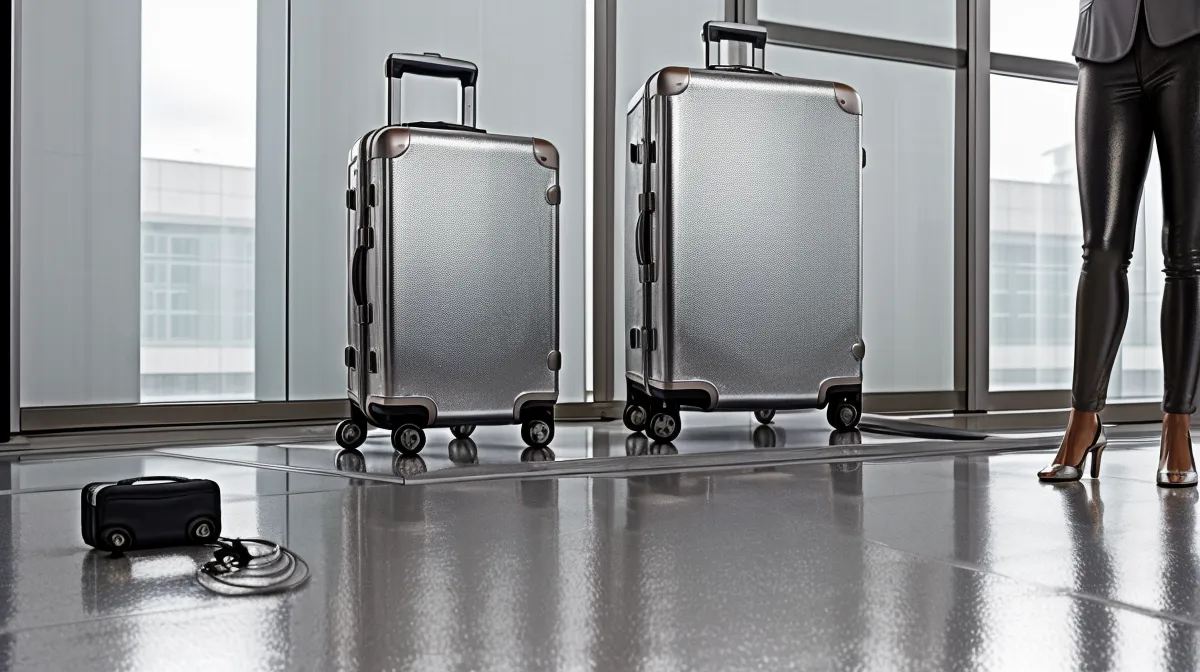
Aluminum does not forgive. Ten months of business travel leave marks on this shell that never buff out, and that single fact tells you almost everything worth knowing before spending real money on a piece of aluminum luggage like the LEVEL8 Aluminum Carry-On. This is a durability test, not a first-impressions carry-on review — the kind you only get by dragging one bag through every regional jet, rental counter, and hotel elevator a normal travel schedule can throw at it. A carry-on either survives that schedule or it doesn't, and after this many flights, mine has opinions about which one this is.
Quick disclosure before the teardown starts: some of the links in this piece are affiliate links, and if you buy a bag or a shipping service through one, I get a small commission at no extra cost to you. That doesn't change what gets said here — I only write up gear I've actually hauled through security lines and cursed at in a hotel room, and the LEVEL8 has earned both compliments and complaints on its own merits.
The Latch-and-Frame System, Not the Zipper
Start with what's actually different about this bag, because it isn't the color. Every soft-side carry-on I owned before this one eventually failed at the zipper — teeth splitting apart mid-trip, a track that wouldn't close no matter how hard I leaned on it. Most aluminum carry-ons, this LEVEL8 included, solve that failure point by skipping the zipper entirely for a gasket-sealed shell and a pair of latches that either lock shut or don't. My old Travelpro is the bag that finally convinced me — its zipper gave out on a bad connection through Chicago, and that trip is the reason I went looking for a frame instead of a track. Zipper construction — track material, tooth gauge, whether it's a real branded pull or a knockoff — is its own rabbit hole, but on this bag it's a moot question, because there's no zipper left to grade.
What replaces it is a mechanical click, plus eight wheels running on bearings quiet enough that you notice other people's bags across a terminal before you notice your own. Wheel construction — dual-caster versus single inline, bearing quality, axle material — deserves its own full teardown, but the one field data point worth sharing after ten months is a faint rattle that showed up in one front axle a few months back. You feel it through the handle grip on rough terminal tile more than you hear it — not broken, just a little loose, and it hasn't gotten any worse since. Hardshell-versus-softside is really a rigidity argument wearing a materials-argument costume, and aluminum sits at the stiff end of it: no flex, no give, and a packing routine that has nothing in common with anything built from fabric.
What Ten Months of Business Travel Actually Do to This Aluminum Shell
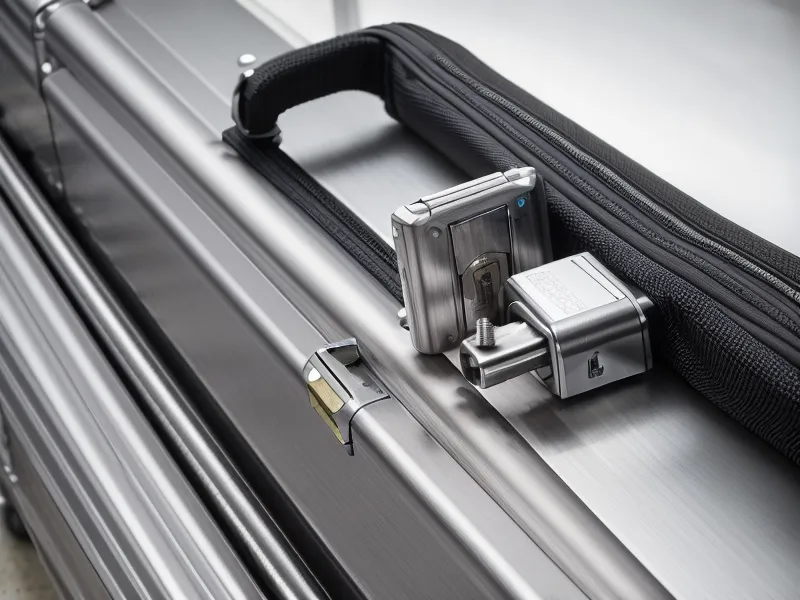
Dents show up early and they stay. The first deep gouge came on a rental-car-shuttle-to-jet-bridge stretch during a winter trip to Minneapolis, and it left a silver scratch straight through the finish that nothing was going to buff out. That's the trade-off you sign up for with a metal shell: it takes an impact instead of absorbing one, so the damage shows on the outside rather than shifting the frame or splitting a seam on the inside. Reframed over this full stretch of every-other-week flying, the pattern holds. The dents accumulate cosmetically, trip after trip, but the shell itself has stayed sealed, and the real question stops being about scratches and becomes whether the latches still close square after a few hundred cycles of getting slammed shut in a hurry.
Mine still do. This bag has been gate-checked on a connection tight enough that there was no time to watch it disappear down the jet bridge, tossed onto the belly cart rather than carried the way you'd carry something breakable, and the latches never so much as rattled loose when I got it back. Gate-check exposure — what that handoff actually does to wheels and hinges over dozens of repetitions — deserves its own full accounting, and it's the reason I flinch a little every time an agent reaches for the pink tag, regardless of which bag I'm carrying. By the time this stretch of testing wrapped, the corners looked like they'd been through a fight and the latches still snapped shut with the same thunk they had on the very first trip, which is really the only claim aluminum needs to make good on.
Not every piece of gear needs to ride with me, either. I've tried shipping samples ahead instead of wheeling everything through security myself. I called a hotel in advance to confirm a package had arrived, only to find three times out of four that the front desk had no record of it at all. Getting a shipped case to actually be sitting at a hotel desk when you land is its own logistics headache, separate from whatever you're wheeling yourself, and it's why shipping your gear ahead only makes sense for oversize gear or sample cases, not a single carry-on. The luggage-shipping trade-off — ground transit time weighed against the hassle of a gate-check — is its own math problem worth working through separately, and fixing a jammed zipper mid-trip with nothing but a hotel pen and bad lighting is a whole skill set of its own that this bag has thankfully made irrelevant for me.
Why This Bag Won't Forgive an Overpacked Carry-On
A rigid frame has zero give, and I learned that the hard way after a stop at The Fashion Mall at Keystone the night before a flight, picking up a couple of things I hadn't planned to pack. With a zipper, you can usually coax another half-inch of fabric to stretch over the top. With this frame, if the two halves don't meet flush, the latches simply refuse to close, and no amount of kneeling on the lid changes that. It turned into exactly the kind of problem you don't want to be solving ten minutes before a car is waiting outside.
Packing a bag like this is its own system — what goes where, what gets crushed if you load it in the wrong order — and it's worth working out before a trip rather than during one. If you routinely need to overpack, Briggs & Riley's compression system genuinely buys you another shirt or two without a fight, which is a different way of solving the same problem this aluminum frame solves by simply refusing to negotiate. Getting a suit from an Indianapolis closet to a client's conference room without wrinkles is its own separate logistics puzzle, and a rigid spinner like this one was never built to double as a garment bag the way a dedicated one is. What the LEVEL8 does buy you is certainty at the gate: it either meets carry-on gauge or it doesn't, and because it can't bulge or compress past its own edges, you never have to guess.
Is the Weight Worth the Trade?
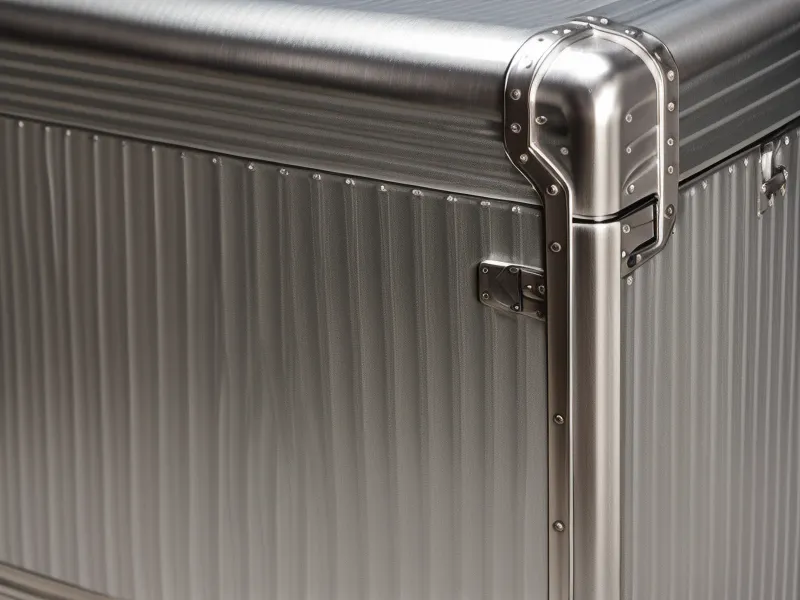
Yes, with a catch. Aluminum is heavier than the ultralight polycarbonate bags dominating shelf space right now, and you feel it lifting this thing into an overhead bin for the third or fourth time in a week. That weight-versus-capacity trade-off is exactly why I keep a running list of best lightweight carry-on options for the days my shoulder votes against aluminum, and it's worth checking that list before committing to a metal shell for every single trip. Whether a rigid box like this one actually fits into the shrinking overhead bins on regional jets is its own sizing question, separate from weight, and one I've worked through in more detail elsewhere.
There's a social side to the weight tax, too, and it caught me off guard. At a conference in Denver, a coworker ran a hand over the shell mid-conversation, guessing it cost three times what it actually did. Aluminum reads as an executive purchase whether or not the price tag agrees. Product-line tiering, the difference between an entry-level model and a flagship from the same brand, is a different kind of decision than choosing a material, and it's worth sorting through separately if brand ladder matters to you. For me, the extra weight is a fair trade for a shell that won't get crushed if someone stacks a heavy checked bag on top of it in the hold.
Where This Aluminum Luggage Fits Against Briggs & Riley, Travelpro, and Shipping It Instead
Warranty coverage is where the price gap actually shows itself. Briggs & Riley's lifetime warranty explicitly covers airline-handler damage, not just factory defects, and that kind of guarantee is a genuinely different value calculation than anything LEVEL8 currently offers, worth its own full breakdown if warranty terms are what decide a purchase for you. My neighbor Trent asked me at a block party years ago what carry-on to buy for a new job that suddenly had him flying every month, and the bag he ended up with taught both of us something: he loved it for over a year, then started complaining about the handle in a way I initially brushed off as normal wear. It turned out to be an early warning sign of a real construction flaw rather than an annoyance, and it's a reminder that a once-a-month flyer and a biweekly one discover a bag's weak points on very different timelines.
If you need luggage that looks pristine for a decade, this isn't it. A nylon Briggs & Riley will hide a lot more sin over that timeline. But if what you want is a mechanical sense of security and a shell that shrugs off the overhead bin instead of folding to it, the LEVEL8 below is the one I keep checking back into. And if you're the type who'd rather skip the gate-check gamble altogether with oversize gear, Luggage Forward solves a completely different problem than any hardshell can.
LEVEL8
Pros
- ✔ Aesthetic of high-end luxury at a third of the price
- ✔ Remarkably quiet 8-wheel spinner system
- ✔ Gasket seal and latches eliminate zipper failure points
Cons
- − Aluminum dents and scratches permanently
- − Noticeably heavier than polycarbonate alternatives
- − Zero 'give' for overpackers due to rigid frame