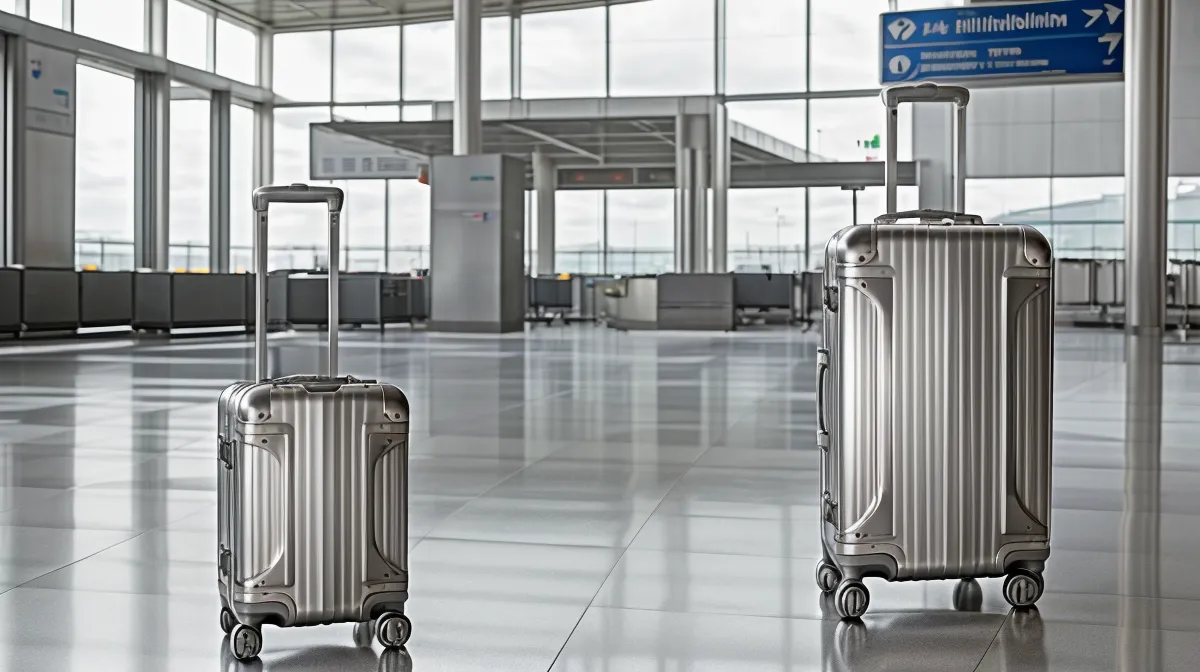
The wheel housing goes first — a flat crack against a curb outside the terminal doors, the kind of sound that means the plastic isn't coming back. That was the end of trusting a polycarbonate carry-on with a business-travel schedule that never really lets up, and the start of an occasionally ugly experiment with an aluminum-shelled case instead. Quick disclosure before any of this gets useful: I run affiliate links on this site, so if you end up buying the LEVEL8 Aluminum Carry-On through one of them, I get a small cut at no extra cost to you — the kind of arrangement that only works if I'm honest about what actually held up.
Every road warrior on a corporate expense account eventually asks the same question: hardshell or soft-side, and is the price difference actually buying you anything besides a shinier logo. Short answer: an aluminum shell wins on crash protection and loses on looking pretty afterward. This whole piece is really the long version of that trade, stacked up against a warrantied soft-side option and the Travelpro-style fallback a lot of flyers already own.
Aluminum Versus Plastic: The Real Physics
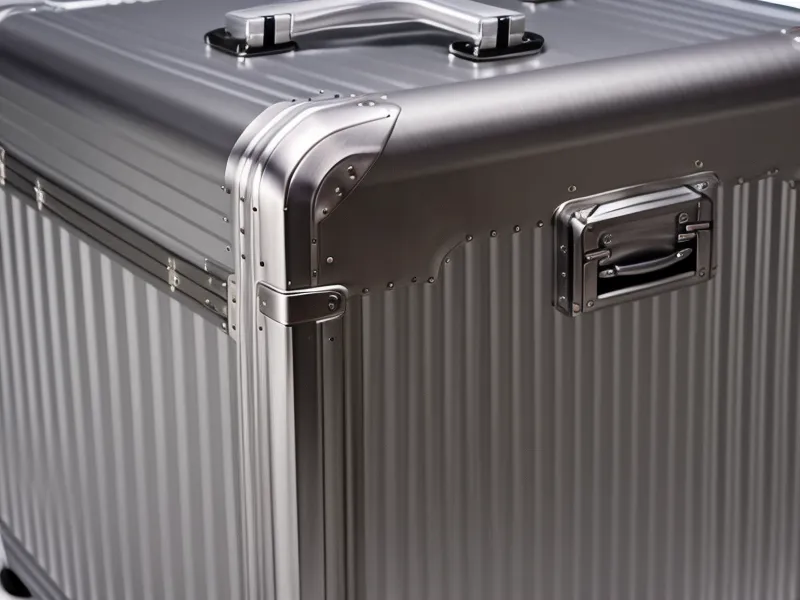
Aluminum and polycarbonate fail in opposite directions. Once you've flown enough connections to test both, the distinction stops being marketing copy. The LEVEL8's shell is a 6061 aluminum alloy frame, riveted rather than glued, and it behaves like sheet metal because it is sheet metal — it doesn't flex on impact, it deforms. A polycarbonate shell does the opposite: built to absorb a hit and spring back, which sounds better right up until the day it doesn't, and the wheel housing just gives up entirely instead of denting.
Picking between the two is closer to picking a vehicle than picking a suitcase. A soft-side case like the Travelpro is the reliable sedan of the category — forgiving, easy to patch, unremarkable in a good way. The LEVEL8 is the heavy-duty truck: it won't flex, it won't apologize, and it rides rougher until the day you need it to survive something a sedan wouldn't.
Does the Latch System Actually Beat a Zipper?
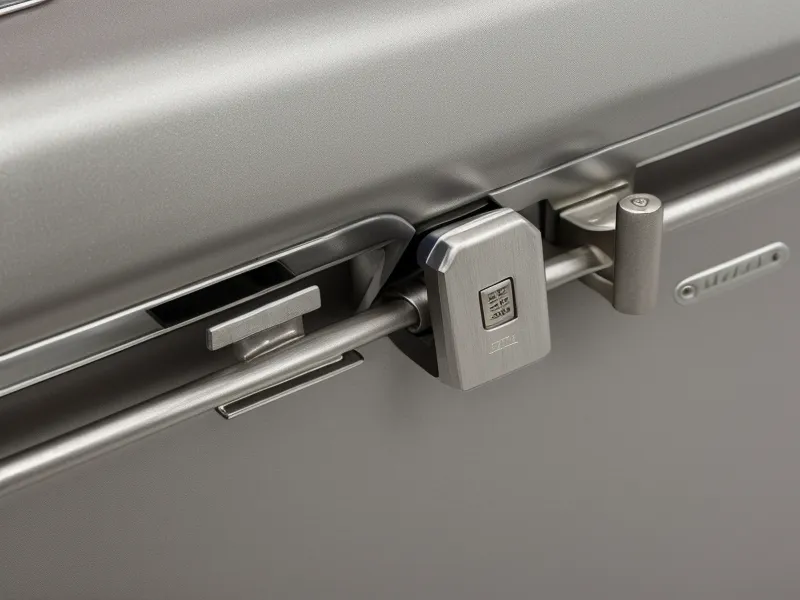
Zippers are the more common failure point on almost every soft-side bag I've owned — one misaligned tooth at altitude and you're improvising with duct tape in a hotel room, though the finer mechanics of why a zipper fails is really its own separate topic. What the LEVEL8 swaps in instead is a rivet-and-frame construction with dual TSA-recognized latches, and the difference shows up the first time you close it.
Snapping those latches shut makes a heavy, deliberate thunk, closer to a car door than a suitcase. Once they click, the whole case feels like one solid unit instead of a fabric envelope held together by a track of nylon teeth.
Watching someone ahead of me in a boarding line wrestle a handle with visible play in the tubes, I noticed mine barely moved at all. It's a small thing, until you're sprinting for a gate with four minutes to spare and the handle just needs to work, not wobble.
The Dent Is the Trade-Off, Not the Verdict
Metal luggage tells the truth about how it's been treated, which is either its best feature or its worst, depending on your tolerance for cosmetic damage. A hard corner hit from a baggage cart on the tarmac left a sharp, permanent dent on the LEVEL8's upper edge, and there was no arguing it back into shape. Aluminum doesn't bounce back. Polycarbonate does, at least until it doesn't.
Structurally, none of that mattered. Whatever was packed inside stayed exactly as flat as it went in, because the frame didn't compress a millimeter — it just wore the hit on the outside instead of hiding it. That's the whole trade with an aluminum shell: superior resistance to crushing forces, at the cost of a case that shows every fight it's been in.
If a pristine exterior five years in matters more to you than the dents, that's a real preference, not a wrong one — and it's exactly the gap a Briggs & Riley fills, especially with a CX expansion system that also buys you room for an extra shirt, plus a lifetime warranty that explicitly covers the kind of airline-handler damage that would otherwise just be your problem. The LEVEL8 offers neither. What it offers is a vault that doesn't care what hits it.
Packing Around a Shell That Won't Give
Rigid construction comes with a packing tax nobody mentions in the marketing photos. The LEVEL8 doesn't expand, so overpacking isn't an option the way it is with a soft-side bag that just strains at the zipper. You either fit inside the vault or you don't, and packing cubes stop being optional once the walls are metal instead of fabric that gives a little.
One bag I abandoned entirely was a backpack-style hybrid carry-on that promised the best of both worlds and delivered neither. No real compartments, so everything sank to the bottom of one cavernous main pocket, and every packing job turned into an excavation before a meeting. Next to that, a rigid shell with a flat, defined interior is almost a relief, even with the expansion trade-off.
Weight is the other side of that same coin — a rigid shell adds ounces a soft-side bag doesn't carry, which matters if you're already flirting with a carrier's cabin weight limit, though that calculation really belongs to its own separate comparison. Wheels are where the LEVEL8 earns its points back. I run every new spinner over the cracked sidewalk seams near the Monon Trail at 54th Street before it ever sees an airport, and this one stayed quiet doing it. It still rolls even and silent across the tile at Chicago Midway, no drift, no catch, long after that corner took its first real hit — a level of consistency I'd only seen before on bags well outside this price range.
The Travelpro Platinum Elite line rolls well too, in fairness, and Travelpro's various tiers each solve a slightly different version of the same durability question. But the LEVEL8's lower center of gravity from the aluminum shell gives it a grounded feel on tile that the softer case never quite matches.
Shipping Ahead Beats Carrying On, Sometimes
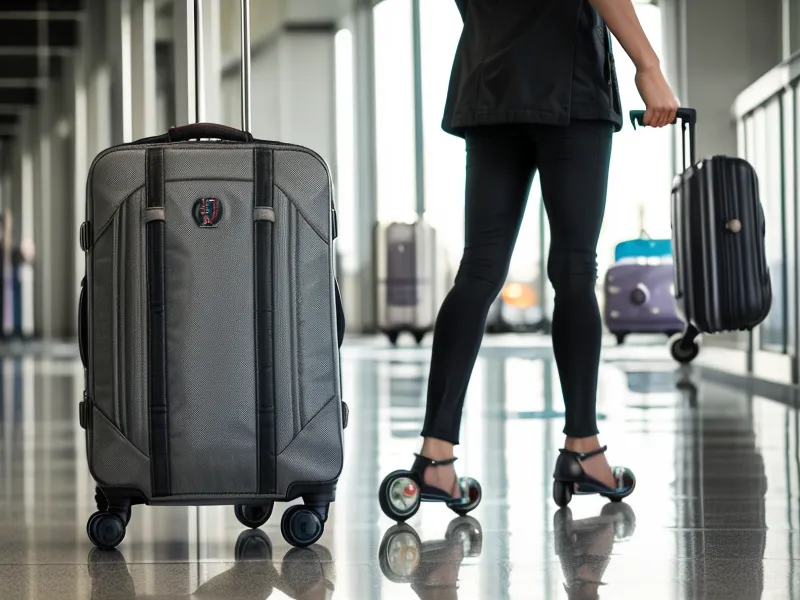
External pockets are the other casualty of an aluminum shell. There's no quick-access slip pocket for a laptop, so I'm stuck also carrying a business travel backpack for anything I need before the overhead bin opens. My colleague Roz Henriksen, who flies just as often as I do, solves the same problem by carrying a second tote that technically violates every airline's personal-item rule and daring anyone to say something about it.
Some trips don't call for carrying anything at all, which is its own category worth mentioning. A reader named Marcy Bellew, who's emailed me on and off since a buying-guide post a while back, likes to point out that she doesn't trust a recommendation unless it comes with an actual failure attached. Shipping gear ahead through something like Luggage Forward has its own failure mode worth naming too: it only pencils out for oversize gear or multiple pieces, and it needs enough lead time that a last-minute trip kills the math entirely.
Which One Actually Earns a Spot in Your Rotation
Comparing the two after enough overhead-bin cycles to trust the pattern, the frame on the LEVEL8 stays square and the latches still close with that same solid thunk, even as the finish collects scratches and a small gallery of dents that read like a travel log. Nothing about that is subtle. Nothing about it is a defect, either — it's just what an aluminum shell looks like once it's actually been used instead of admired.
So here's the actual trade-off, not the marketing version of it: pick the LEVEL8 if maximum crush protection matters more to you than a pristine finish, pick a Briggs & Riley if a warranty-backed exterior that still looks respectable years in is worth the higher price, and stick with a Travelpro-style soft-side if you'd rather have a bag that flexes, patches, and never demands you baby it. None of those answers are wrong. They're just optimized for different kinds of damage.
Every version of the hardside-versus-softside debate eventually comes down to which kind of wear you're willing to live with, not which one avoids wear altogether — nothing survives years of overhead-bin punishment unmarked. If you're done buying carry-ons that crack the first time the temperature drops, you can check current pricing on the LEVEL8 Aluminum Carry-On here and decide for yourself whether you'd rather trade a flawless shell for one that just keeps working.