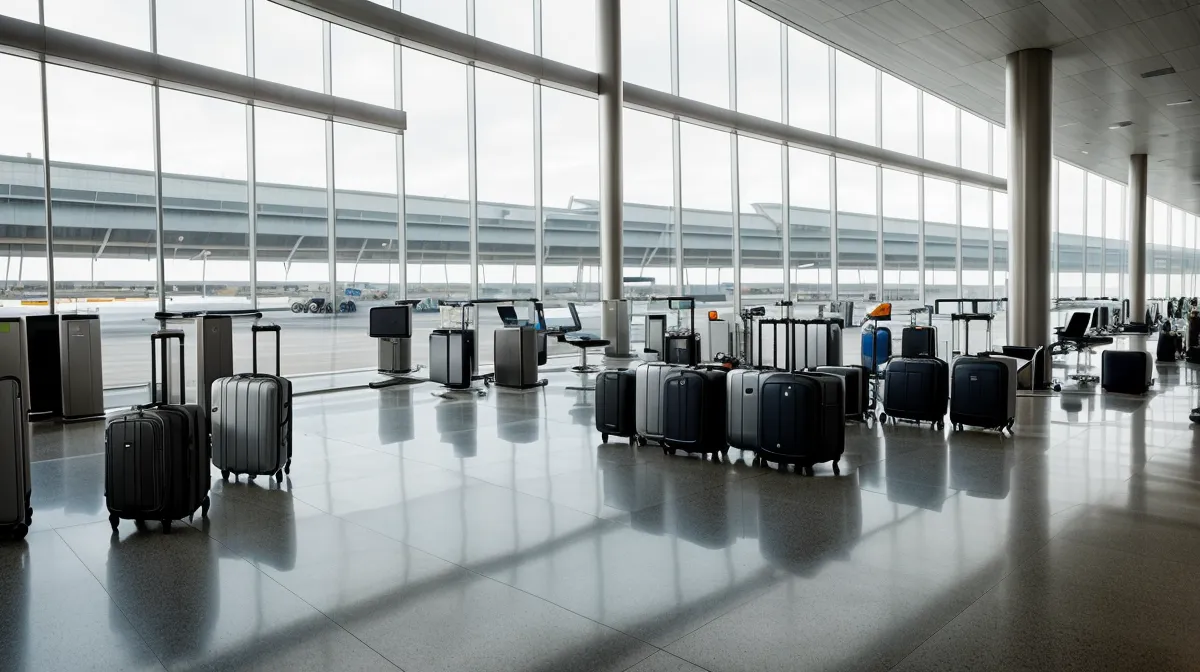
An empty carry-on that tips the scale past ten pounds is already carrying more dead weight than most business travelers realize before they've packed a single shirt. That number sits at the center of the whole lightweight carry-on luggage argument, and it's also the reason one stubborn idea about overhead-bin storage refuses to die: that a heavier bag is automatically the tougher, more capable one. It isn't. Weight and durability are two different measurements that just happen to live on the same bathroom scale, and untangling them is the only way to actually shop for this stuff.
Before we go further: I use affiliate links throughout this piece, and if you buy a bag or book a shipping service through one, I earn a small commission at no added cost to you. Everything mentioned here is a bag I've actually rolled through a terminal, argued with a gate agent about, or shipped ahead when I didn't want to fight the overhead bin at all.
The 'Heavier Means Tougher' Carry-On Myth
Manufacturers lean into the idea that "solid" means heavy — a cast-iron skillet instead of a nonstick pan, a 1990s Volvo instead of whatever crossover is popular now. Add a steel frame, thicker ballistic nylon, an internal compression system, and the bag does get tougher, sure, but it also gets heavier, and that added weight doesn't buy you more room to pack. It buys you reinforcement, which is a completely separate thing from capacity. Inside a fixed overhead bin size limit — the same 22 x 14 x 9 inch box whether you're flying a regional hop or a transcontinental Airbus A321 — every pound of empty bag is a pound you can't fill with shirts, chargers, or the extra pair of shoes you packed "just in case." A ten-pound empty shell and a 5.4-pound empty shell holding the same twenty pounds of clothes are not lifting the same weight into that bin, and your shoulder knows the difference even when the spec sheet doesn't mention it.
Here's the actual rule I use before anything else: weigh the empty bag before you weigh the price tag or the aesthetics. If it's already pushing past eight or nine pounds empty, you're spending your own lift capacity — and possibly your airline's checked-bag weight allowance, if a gate agent forces the issue — on the shell itself, not on what you actually packed. That's the whole myth in one sentence: heavier doesn't mean it holds more or survives more, it just means more of your weight budget went to the frame instead of your belongings. The Travelpro Maxlite 5 is the bag that convinced me of this, mostly because it broke the assumption that light automatically means flimsy.
Why Every Flight Crew Wheels the Same Travelpro
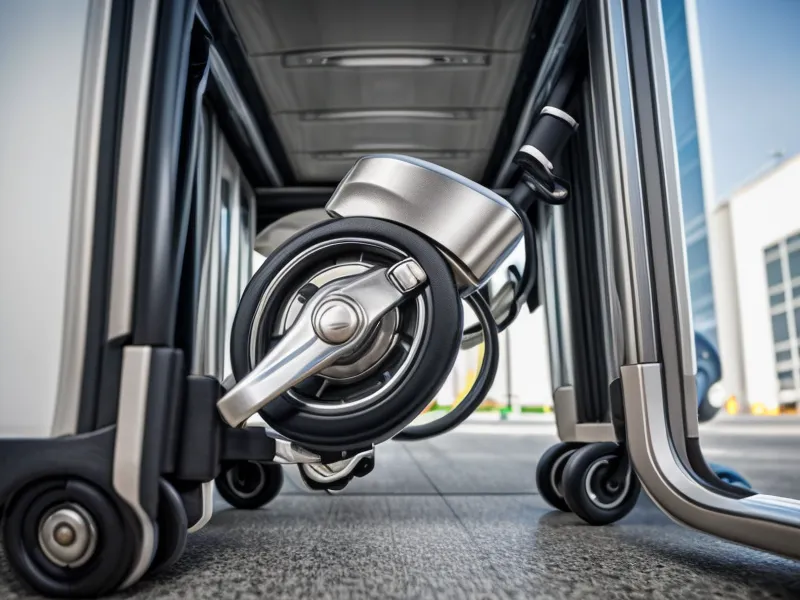
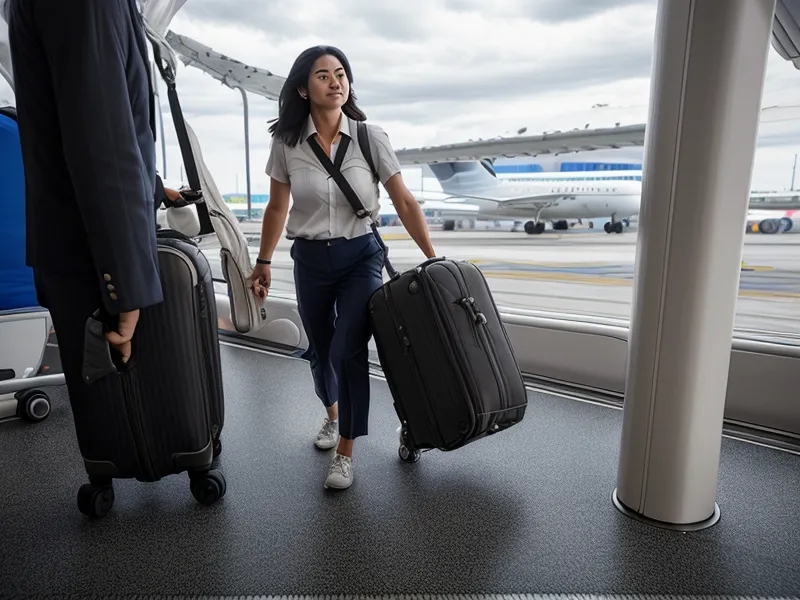
Flight crews — the people who genuinely live in airports, not just every other week like the rest of us — overwhelmingly wheel soft-side Travelpro bags, and that's not a coincidence or a marketing win. Airlines don't let their crews carry gear that falls apart on a rotation, because a blown zipper mid-shift becomes the airline's problem too. At 5.4 pounds for the 21-inch Rollaboard, the Maxlite line sits about as light as a bag gets without turning flimsy, and the soft-side shell has just enough give to compress a stuffed load instead of fighting it the way a rigid case does. The Maxlite sits at the affordable end of Travelpro's lineup, too — step up to their Platinum Elite line and the tradeoffs shift again, though that's a comparison for a different piece.
I tried fixing the volume problem with compression bags for a while, cinching them down hard enough to squeeze another day's worth of shirts into the same shell, and it worked right up until I unzipped the bag at the hotel and found every dress shirt looking like it had been slept in. Compression solves a volume problem, not a wrinkle problem, and cinch bags are only half of an actual packing system — the fold-and-layer part matters just as much, and that's a deeper subject than I can do justice to in a piece about weight.
My neighbor flies remote-control planes out at Eagle Creek Airpark most Sunday mornings, and one weekend, while I was repacking for a Monday flight, he asked what I actually look for in a carry-on. I realized I'd never said it out loud: it's not the brand, it's not the price, it's the empty weight relative to what you actually need to carry, every single time.
Extra Reinforcement Costs You Twice
Take the Briggs & Riley Baseline Global Carry-On as the other end of the spectrum. It's built like furniture, with the internal hardware and heavy ballistic nylon to prove it, and it weighs about ten pounds before you've packed anything. Briggs & Riley leans hard on a lifetime warranty that covers airline-handler damage as its main pitch, and whether that coverage is worth the extra weight and higher price tag is really its own analysis, not something I can settle in a paragraph here. The CX-2 compression system is the other headline feature — it genuinely buys you another shirt or two without splitting a zipper seam — but how that mechanism is actually engineered deserves its own write-up rather than a few lines buried in an article about weight. What the reinforcement costs you twice is this: once in the extra pounds you're lifting overhead, and again in the packing volume that same reinforcement hardware eats up on the inside. More structure, less usable space, for the same external size limit.
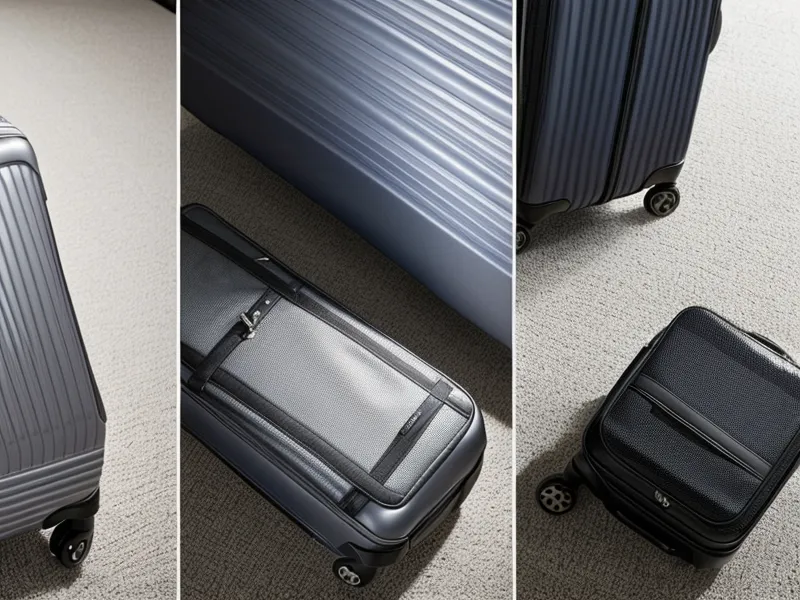
I've gone deep on the softside vs hardside luggage question elsewhere, and for weight purposes the short version is that softside almost always wins the scale — there's no rigid shell to reinforce, so the whole structure can be lighter by design. If you're a daily-driver flyer who never checks a bag, that lightweight maneuverability is what you want. If your bag regularly gets buried under gear on a longer trip, the Briggs earns its keep. None of that matters, though, if the bag ends up gate-checked anyway — that's a different kind of abuse, with its own list of what tends to break first, and not the subject of this piece.
An Aluminum Shell Trades One Kind of Weight for Another
The LEVEL8 hardshell was the bag that exposed the tradeoff from a different angle. It looks the part, with an aluminum frame that mimics the look of far pricier European brands, but it lacks the external pockets a soft-side bag gives you, and fumbling for a laptop at security while wheeling one felt slower every single time next to a bag with a dedicated pocket. Aluminum dents rather than flexing back the way polycarbonate does, so the first real scuff on a corner is a permanent one, and how that shell is actually built — the framing, the rivets, the way it distributes a corner impact — is worth its own deep dive rather than a few sentences here. The spinner wheels on it are quieter than most budget hardshells, for what it's worth, which says something about how much of the "premium feel" argument really comes down to bearings and not the shell material at all.
Shipping Around the Whole Overhead-Bin Problem
Some trips make the entire weight argument irrelevant. When I'm hauling sample cases or bringing golf clubs to a client retreat, Luggage Forward ships the bag door-to-door and takes the lifting question off the table completely — you can even use it for shipping golf clubs instead of wrestling an oversized case through the terminal. It only pencils out financially for oversize gear or multiple pieces, and working out exactly when the math favors shipping over checked-bag fees is its own calculation I've written up separately. A few of those shipments went straight to a hotel front desk waiting for me before I'd even landed, which solves a logistics problem of its own that's worth more than the one sentence I'm giving it here. And if you're hauling a suit instead of folded shirts, that's a completely different packing puzzle with its own answer — not the one this piece is solving.
Weigh the Empty Bag Before You Weigh Anything Else
The Maxlite's wheels — a standard four-wheel spinner setup — held up better than expected on rough pavement outside the terminal. Push a spinner like this over anything but glass-smooth tile for long enough and you'll eventually feel a faint rattle climb up through the handle from a wheel axle that's gone a little loose — not broken, just loose, the kind of thing that doesn't announce itself until you're already deep into a connection and wondering if you should be worried. Usually you shouldn't be; on the rare occasion a wheel does wear out, they're famously easy to replace with nothing more than a basic hex bolt, which matters more than any spec sheet once a bag is deep into an every-other-week travel schedule.
Overhead bins aren't identical from jet to jet either, so check your airline's actual carry-on size limits before assuming a bag that fit on a mainline flight will fit the same way on a regional hop — that's a separate rabbit hole with its own answer. More than once I've speed-walked through O'Hare's Gate H7 on a tight rebooked connection, and the thing I actually noticed wasn't the bag at all — it rolled straight and true without me checking on it once, which is exactly the kind of unremarkable performance you want from something you're about to lift over your head yet again.
For someone flying every other week, the best bag isn't the one with the most bells and whistles or the highest price tag. It's the one that lets you get through the day without needing an ice pack on your shoulder by the time you reach the hotel. Weigh the empty shell before you fall for the reinforcement pitch, the compression system, or the aesthetics — if it's already pushing double digits with nothing packed inside, keep looking. The Travelpro Maxlite 5 is the bag that currently passes that test for me, and if your shoulder is already tired of arguing with gravity, it's the easiest place to start.