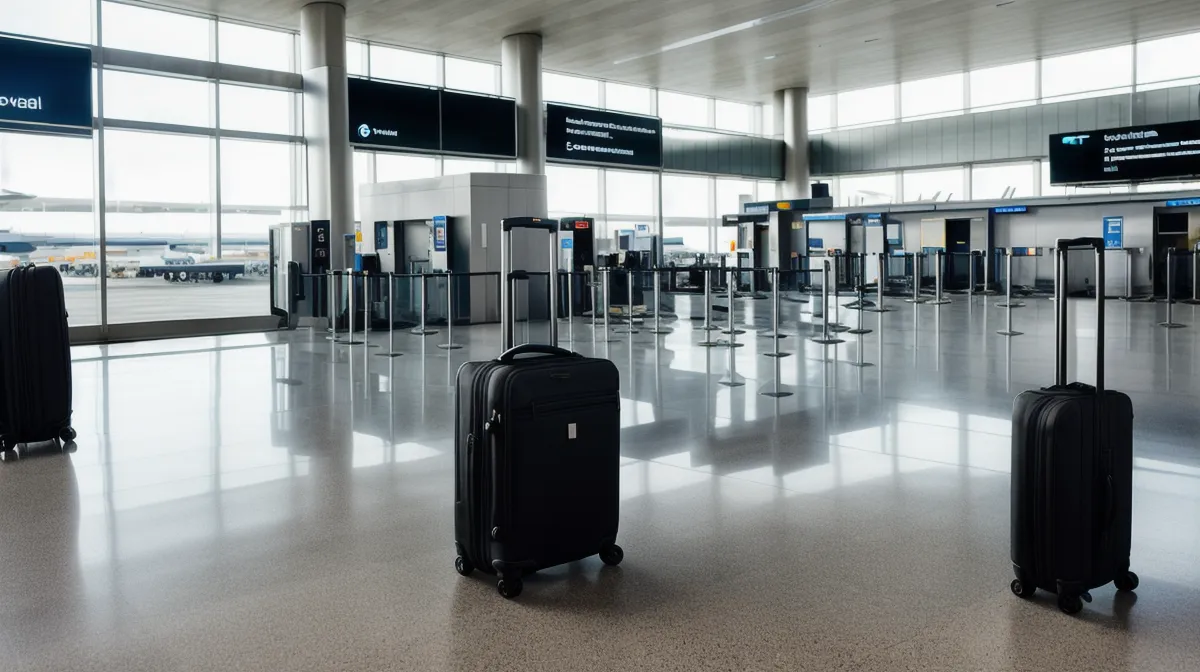
Standing at the Indianapolis airport taxi stand late one Sunday night, I watched a coworker’s luggage finally give up the ghost. We’d just landed after a delayed connection, the kind of night where the air smells like jet fuel and damp pavement, and as he stepped off the curb, one of his spinner wheels simply snapped off and skittered into the gutter. He was left dragging a dead weight across the asphalt like a wounded animal. I stood there, hand on the handle of my Briggs & Riley, feeling that specific brand of weary sympathy you only get after a decade of bi-weekly flights. This site uses affiliate links, and if you buy luggage through them, I earn a commission at no extra cost to you; I only recommend gear I’ve actually dragged through terminals myself. Full transparency policy is available here.
I’ve been that guy. My garage has a corner I call the "bag graveyard" where three different carry-ons sit in a pile of shame. One has a zipper that separated during a humid Tuesday in July, another has a cracked shell from a mid-winter O’Hare connection, and the third just lost its structural integrity until it sagged like an old sofa. Most people buy luggage like they buy a kitchen knife—they grab the one that looks shiny in the store, only to realize six months later that it can’t actually hold an edge. In the world of travel, a bag is your daily driver, and most of the stuff on the market is built like a disposable rental car.
The High Cost of Disposable Luggage
For years, I operated under the delusion that if I spent a moderate amount on a bag, I was being sensible. I’d buy something mid-tier, use it for eighteen months until the handle started to wobble, and then replace it. But eventually, the math stops working. When you’re flying every other week, you aren’t just a traveler; you’re a stress-test technician for nylon and plastic. I realized I was tired of the "Overhead Bin Gamble," a game where you pray your bag doesn't explode while you're trying to shove it into a tight spot on a Tuesday morning. I eventually wrote about my system for deciding between carry-on and checking a spinner, but the hardware has to be up to the task first.
The transition to Briggs & Riley wasn't about status. It was about the 1680D ballistic nylon. This material was originally designed for flak jackets during World War II, and while I’m not dodging shrapnel in the Delta terminal, the way baggage handlers treat a gate-checked bag is a close second. Unlike the trendy hardshells that look great in Instagram ads but crack across the corner when the temperature drops, this fabric is designed to absorb the punishment and keep moving.
The Mechanical Magic of the CX-2 System
The turning point for me was a trip to Minneapolis in mid-January. I needed to pack five days of winter gear—heavy sweaters, an extra pair of boots, and dress shirts for client meetings—into a bag that met the standard carry-on dimensions of 22 x 14 x 9 inches. This is where the CX-2 compression system earned its keep. You expand the bag, pack it full, and then press down on the top. I still remember the heavy, mechanical "click-click-click" of the CX-2 hinges as I pressed down, ratcheting the bag back to its original size. It’s a satisfying, industrial sound that makes you feel like you’re closing a vault door.
There is a measurable tradeoff here that most people miss. When you choose the superior lifetime durability of a premium case like this, you are sacrificing a bit of internal packing volume compared to the flexible, thin walls of a cheap fabric bag. The Briggs & Riley frame is robust; it doesn’t bow or flex. While a budget bag might let you overstuff it until it looks like a stuffed sausage, this bag forces you to respect its boundaries. In exchange, your clothes actually stay flat, and the bag doesn’t look like it’s about to burst at the seams when you’re standing in front of a gate agent.
The Tarmac Torture Test
The real test came in early September during a forced gate-check on a CRJ-200 regional jet. If you’ve flown these routes, you know the drill: the overhead bins are too small for anything larger than a briefcase, so your carry-on gets a yellow tag and a trip to the tarmac. It was pouring rain—a thick, Midwestern downpour that turned the runway into a lake. I watched from my window as my bag was tossed onto the wet pavement and left there for twenty minutes while they finished loading.
When I picked it up at the jet bridge on the other end, the exterior was soaked, but the interior was bone dry. My laptop and my 3-1-1 liquids bag were exactly as I’d left them. That’s the difference between a bag built for a marketing brochure and a bag built for the reality of regional travel. I’ve had other bags, specifically a Travelpro, which are fantastic and favored by flight crews for their lightness, but for absolute armor-plated peace of mind, the Briggs & Riley is in a different league. If you’re curious about the lighter side of things, I’ve also looked at why I choose Travelpro for heavy use on regional routes when weight is the primary concern.
Wheels, Handles, and the Body’s Reaction
After a decade of doing this, my body has started to keep score. I’ve noticed a distinct lack of shoulder strain when this bag tracks perfectly straight across the terminal floor. Cheap wheels have a tendency to "drift," requiring you to constantly fight the bag’s momentum to keep it from clipping the heels of the person walking next to you. The spinner wheels on the Baseline series use high-grade bearings that feel less like a shopping cart and more like a precision tool. It’s the difference between a cheap serrated knife and a properly balanced chef’s knife; you don’t realize how much extra work you were doing until you use something that actually works.
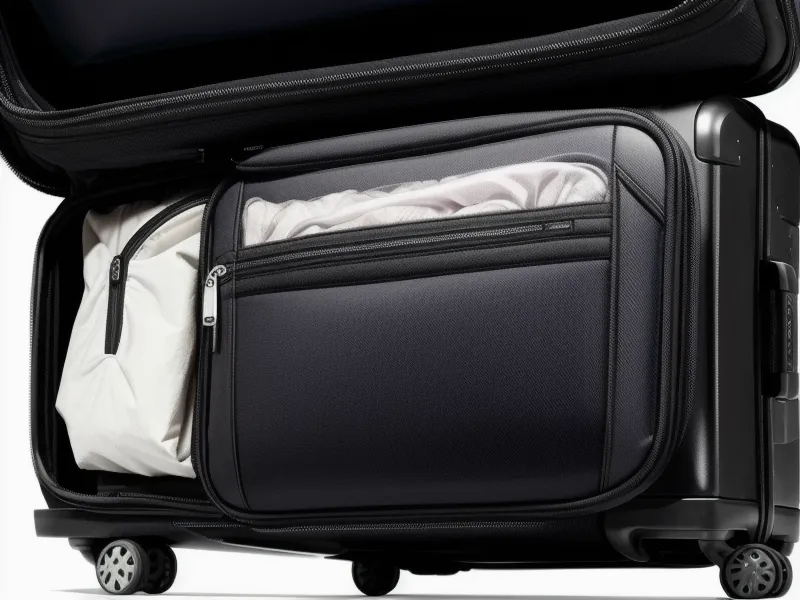
I’ve also had moments of smug confidence watching a gate agent eye the crowd for oversized bags. They look at the structured, clean lines of the Briggs & Riley and move right past me to the person with the bulging, overstuffed hardshell. It fits the sizer perfectly every single time because the internal frame prevents the bag from "bloating" even when it's packed to the limit. If you’re tired of the airport hustle and want to bypass the bin fight entirely, sometimes it’s worth looking into Luggage Forward to just have your gear waiting at the hotel, but for the every-other-week warrior, the right carry-on is still the primary weapon.
If you aren't quite ready for the premium jump but want something that looks the part, LEVEL8 offers some very sleek aluminum-frame models that handle the "bin punishment" better than most, though they lack the mechanical compression that makes the Briggs & Riley so unique. However, if your work pays for the flights and you're tired of replacing your bag every two years, there is only one real choice. The current price is on the vendor's page and can change, but the value of never having to buy another carry-on for the rest of your career is hard to overstate.
How It Held Up
I’ve put this bag through roughly forty trips over the last year, ranging from quick overnight hops to full-week client engagements. The 1680D nylon has some very minor scuffing on the bottom near the wheels, but the zippers are as smooth as the day I bought it. The lifetime warranty is the ultimate safety net—they explicitly cover damage caused by the airlines, which is a level of confidence you just don't see in the budget tier. For the frequent flyer who needs a bag that won't fall apart on a rainy tarmac at midnight, this is the one. Skip the "disposable" options and buy the bag that will outlast your current job title.
Briggs & Riley
Pros
- ✔ Lifetime warranty that actually covers airline-inflicted damage
- ✔ CX-2 compression system lets you pack 20% more and then shrink it to size
- ✔ 1680D ballistic nylon is virtually indestructible against jetway scuffs
- ✔ Outer handle design provides a flat interior packing surface for fewer wrinkles
Cons
- − Heavier than minimalist hardshell alternatives
- − Premium price point is a significant initial investment