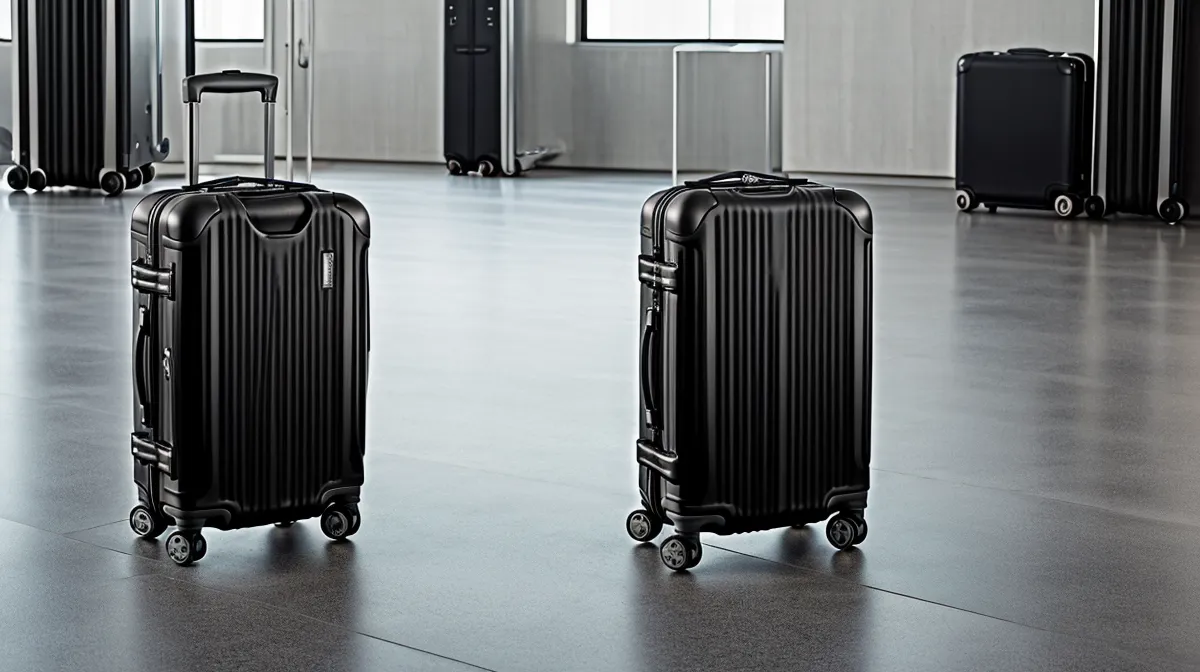
People often flip a carry-on over in a store aisle, run a thumb along the zipper pull, spot the little YKK stamp, and decide right there that the bag would survive business travel. That three-letter stamp gets treated like a durability guarantee, and by itself it isn't one. After watching a couple of zippers fail in ugly, public ways, and one hold together beautifully on a bag whose frame didn't deserve it, I stopped trusting the tag and started checking something most carry-on shoppers never look at.
Quick disclosure before we get into teeth and tape: this site runs on affiliate links, and if you buy luggage or a shipping service through one of mine, I earn a commission at no extra cost to you. I only point people toward gear I've actually hauled through airports myself, like the Briggs & Riley bags that come up later in this piece. Recommend what survived, disclose the link, move on.
The YKK Tag Doesn't Mean What Most People Think
Here's the misconception, stated plainly: people assume "YKK" by itself signals a rugged zipper. In reality, Yoshida Kogyo Kabushiki Kaisha makes something like half the zippers on earth: everything from the flimsy pull on a cheap pencil case up to the industrial coil bolted onto cargo duffels. The name tells you who manufactured it, not how tough it is. What actually matters is a number almost nobody looks for.
The Real Number Behind Every Zipper Pull
Cheaper luggage commonly runs a size 5 or 7 zipper, and that number measures the width of the teeth in millimeters once the zipper is closed. A size 10 is a different animal: wider teeth, more overlap, built to resist bursting open when you're leaning a knee on the lid trying to fit one more folder into a bag that still has to clear FAA carry-on limits of 22 x 14 x 9 inches, constraints covered in more detail in Airline Carry-On Size Limits by Carrier: A Reference Chart. That size number stamped on the slider is the real signal; the three letters next to it are just the manufacturer's name.
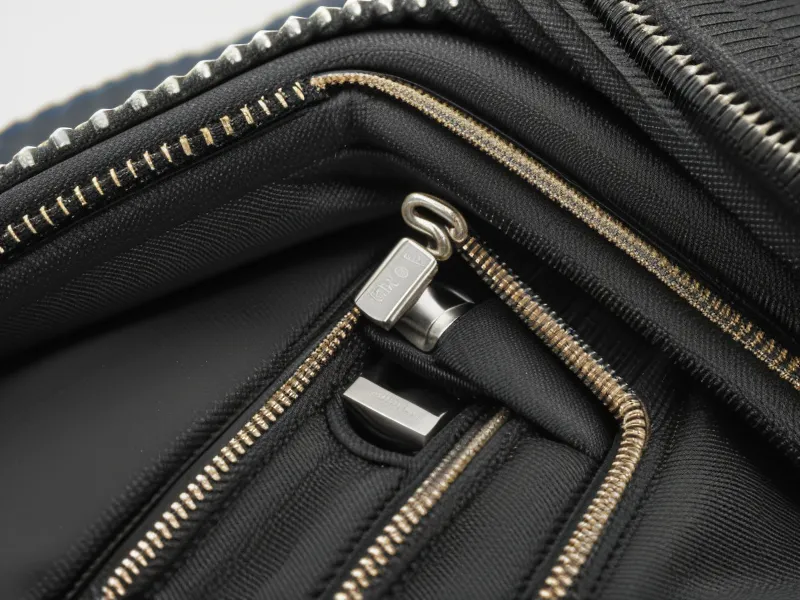
Coil construction adds another layer most shoppers never notice, and it's worth knowing before you buy. YKK's RC coil zippers run a spiral of nylon stitched to the tape instead of individually molded plastic teeth, which makes them self-repairing in a way molded zippers aren't. Knock a section out of alignment (a shirt collar caught in the slider, say) and running the pull back over the same spot usually snaps it straight again. Molded teeth don't forgive that kind of abuse; once one deforms, it stays deformed. A neighbor of mine spends every Sunday morning out at Eagle Creek Airpark flying remote-control planes, completely fixated on tiny mechanical tolerances, and I get exactly that worked up about zipper coils, just somewhere less fun than an airfield.
When a Bulletproof Zipper Sits on a Weak Frame
None of that means heavy-duty hardware saves a bad bag, and this is the part the marketing copy conveniently skips. A colleague of mine had a carry-on come apart on a snowy Indianapolis morning with the zipper completely intact, every tooth aligned and slider gliding fine, while the polyester around it had sheared clean off the tape. The hardware held. The bag didn't. Bolting a size-10 coil zipper onto a thin, soft-walled shell is a bit like putting a good deadbolt on a screen door: the lock stops being the weak point, but the door still isn't.
That colleague's failure is part of why I spent a stretch testing hardshells too, something I wrote up separately in Why I Switched to Level8 Hardside Luggage for Heavy Business Travel, though for regional hops I keep coming back to soft-sides built around real coil zippers. None of this changes much if you go hardshell instead, which is its own trade-off between dents and flex that deserves a separate answer, but the same rule applies at the seams where a shell's two halves meet. Zippers also take the worst of it exactly where gate-checking happens: shoved onto a baggage cart, crushed under something heavier, cinched down by a strap that was never rated for that kind of load, which is its own topic for another day.
What a Zipper Feels Like Under Real Load
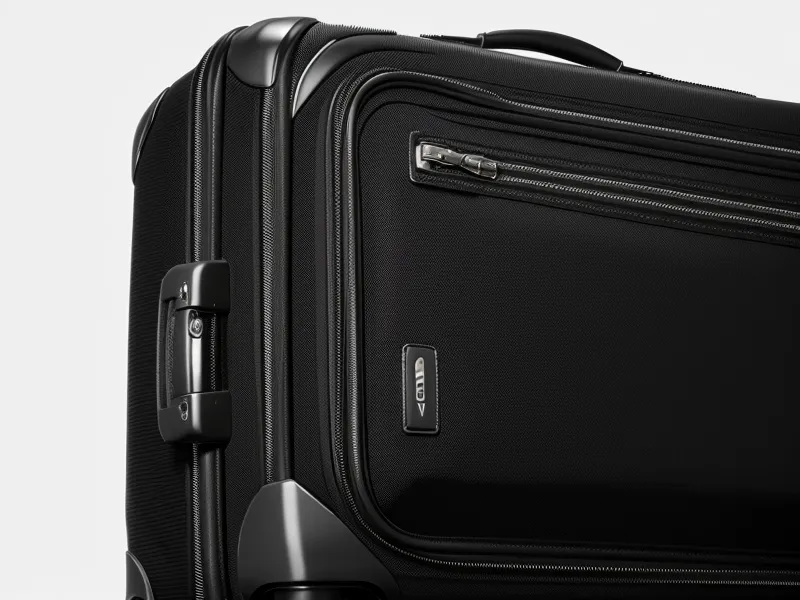
Testing the Briggs & Riley Baseline turned this from theory into something I could feel with my hands. Their CX-2 system compresses the whole packed load against the frame, which puts real torque directly on the zipper teeth every time you close it: a stress test built into ordinary use, not a lab measurement. The Baseline carry-on's height lands at exactly 22 inches, right at the domestic limit, and closing it under a full load produces a solid, metallic click instead of the tinny rattle I'd gotten used to on cheaper bags. I went through a stretch of relying on vacuum-style compression bags to solve the same packing math, and they delivered on volume right up until I unzipped one in a hotel room and pulled out dress shirts creased hard enough to look slept in. Compressing the outside of a garment and compressing the inside of the fabric turned out to be two different problems, and only a built-in system like the CX-2 solves both without dumping all that strain back onto the zipper.
Warranty coverage changes the math too, and the short version lives in Briggs and Riley Luggage with Lifetime Warranty After Constant Use: it explicitly covers damage baggage handlers cause, a burst zipper included, while most other brands just point you back at the airline and wish you luck. The same bag still rolls dead straight across the tile at Chicago Midway, no drift toward the escalator, no catch in the axle, which has nothing to do with the zipper directly, but it's the kind of detail that builds trust in a brand's hardware everywhere else on the bag too. The one time a zipper on that bag ever fought me was a bone-dry January trip, when the tape at one corner had stiffened up enough that I had to lean into the slider with real force to get the last few inches closed. It wasn't broken, just cold and dry, and it loosened right back up once the bag sat indoors for an hour. If a zipper does jam mid-trip for reasons less forgiving than that, there's a fix for it too, a topic that deserves its own walkthrough rather than a rushed paragraph here.
So How Do You Actually Judge a Zipper Before You Buy?
Skip the store lighting and the color options and do a few things instead. Look for the size number stamped on the slider itself. A 10 belongs on a bag built for real abuse, while a 5 or 7 is fine for something that mostly rides in a closet. Run a finger along the coil to feel whether it's a continuous spiral or a row of separate molded chunks, since only the coil version realigns itself after a snag. Then check the seam where the zipper tape meets the fabric. If that stitching looks thin or single-pass, no amount of zipper grade will save the bag once real pressure hits it. A warranty that names baggage-handler damage specifically is worth checking too, because it tells you the company already expects its hardware to get tested this way.

Picking Your Own Daily Driver
Not everyone needs bank-vault hardware. Someone whose bag comes out of the closet twice a year for a family trip will do fine with a Travelpro. It's the same line flight crews drag through jet bridges every working day, which is about as close to a real durability test as this industry gets. Flying every other week changes the calculation completely: the zipper stops being a feature on a spec sheet and becomes the single point of failure that can end a trip before it starts. On the trips where a zipper blowout or a gate-check genuinely isn't an option, back-to-back cities with no slack anywhere in the schedule, I'll sometimes skip the carry-on gamble entirely and ship gear ahead with Luggage Forward instead, trading a bit of cost for one less way the trip can go sideways.
Peace of mind was never about the color of the shell or how many pockets a bag advertises. It comes down to the size number stamped on a zipper slider, whether the teeth are coil or molded, and whether the fabric around them earned the right to that hardware in the first place. Check the slider before you check the price tag, and the zipper stops being the thing that ends a trip early.