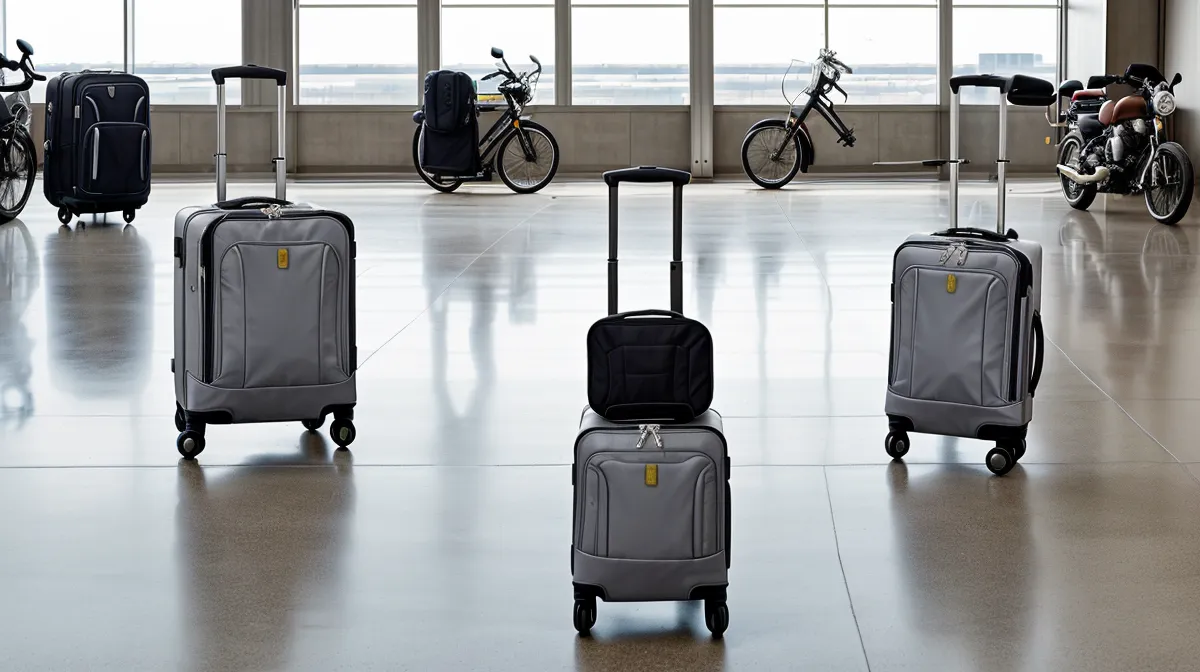
I've broken plenty of spinners. I've lost count of mine, and business travel keeps forcing the question back on me, because every time a stretch of regional-airline connections lines up on my calendar, the same argument replays at the gate. Spinner wheels and inline skate wheels aren't two versions of the same wheel. They're built for different floors entirely, and only one of them was designed with the scuffed, salted reality of a regional concourse in mind, not the marble atriums in the airline's ad campaign. Carry-on-packing decisions used to feel cosmetic to me. Then a wheel casing split on me mid-trip, and the luggage-durability question stopped being theoretical.
Quick disclosure before the wheel autopsy: some of the links below are affiliate links, and if you use them I earn a commission at no extra cost to you. I only vouch for bags and services I've actually dragged through a regional concourse — not stuff I read about on a spec sheet. My full transparency policy is available elsewhere on the site.
The Amazon Spinner That Cracked on Its Second Trip
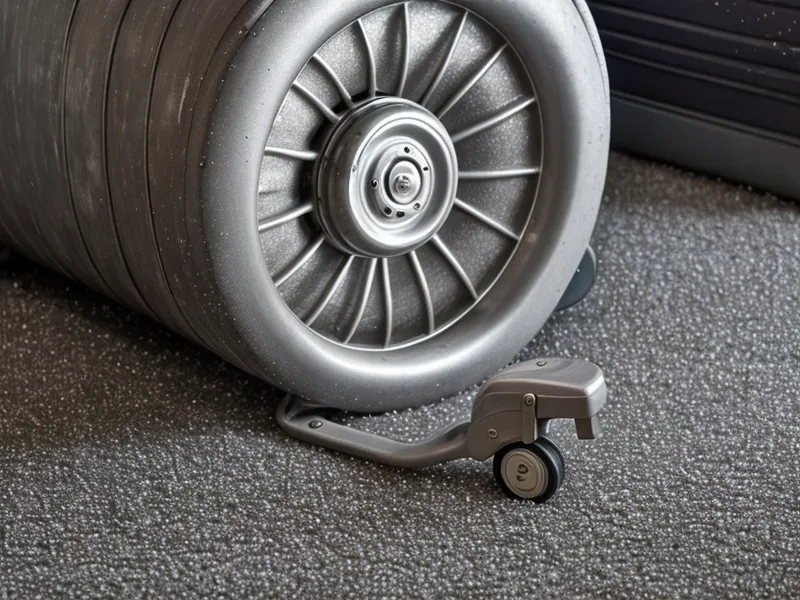
A reader named Marcy Bellew has emailed me often enough over the years to know she won't take a recommendation seriously unless it comes with a failure attached (she's right, for what it's worth), so here's the one that still bugs me: a no-name spinner I bought off Amazon on a whim cracked its wheel casing on the second trip I took it on. Not a scuff, not a wobble — the housing split clean enough that the wheel dragged sideways every third step through the terminal. It didn't feel like a cheap bag when I unboxed it, and that's exactly the problem with judging a spinner from a countertop instead of a jet bridge.
That crack is why I stopped assuming a heavier price tag means a tougher wheel. The spinner looked identical to bags that had survived years of gate abuse, right up until the housing gave out on a completely ordinary trip — no dramatic curb jump, no baggage handler tossing it off a jet bridge, just a normal roll from the rental counter to the terminal. If a wheel fails that easily under boring conditions, it was never going to survive an actual travel schedule.
Why Do Regional Concourses Break Spinner Wheels Faster?
Regional jets like the Embraer 145 don't get the wide, glossy concourses of a major hub, and if you fly enough of them you start to notice the floor quality drops right along with the seat count. These planes seat somewhere in the neighborhood of fifty people, and the terminals built around them tend to have narrower gate areas and rougher composite flooring than a big hub — exactly the conditions where an open-caster spinner starts to struggle. Gate agents get a good look at your wheels while your bag sits in the sizer, and I've watched more than one traveler get waved toward a gate check because the spinner's wheel assembly pushed the bag a hair past the bin opening.
Gate-check exposure is really its own topic — the way a jet bridge toss treats a wheel assembly could fill another post entirely, so I'll leave that thread for another day. What I'll say here is that if your bag is carrying something you genuinely cannot risk losing to a rough gate check — trade show samples, demo gear, anything oversized — shipping it ahead with a service like Luggage Forward takes the wheel question off the table completely for that piece of gear. It only pencils out for bulkier shipments or multi-bag trips, but on the trips where it applies, it removes an entire category of risk.
Two Inches You Don't Get Back
Wheel casters are not free real estate. A standard domestic carry-on ceiling is usually around 22 x 14 x 9 inches, and on a spinner, all four wheels sit outside the main body of the bag, eating into that allowance instead of hiding inside it. Recessed inline skate wheels tuck halfway into the frame, so the same exterior dimensions leave you with noticeably more usable packing volume — the difference between one more pair of shoes and a shirt folded around them like origami.
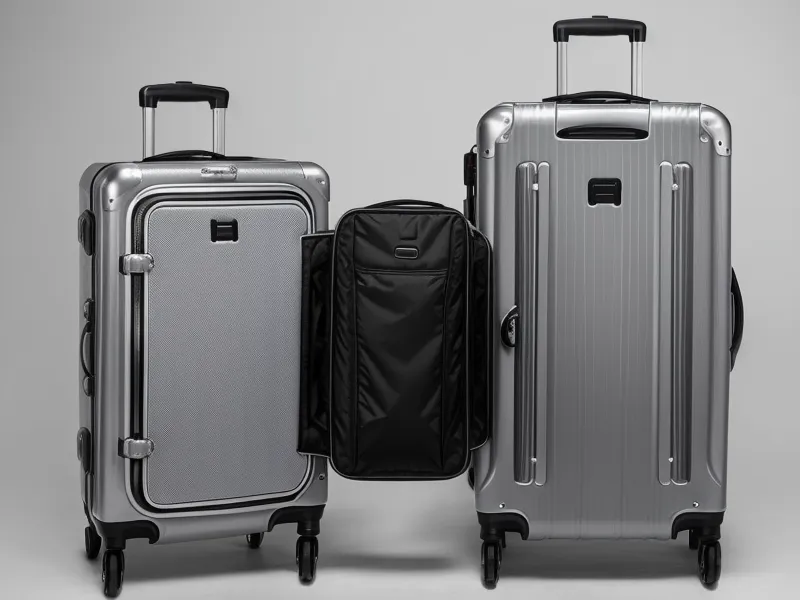
That extra volume shows up in places you don't expect until it's already helping you. Hoisting my bag into the overhead bin on a recent connection, I noticed there was no wince in my shoulder at all — the bag felt lighter going up than it had any right to, and I traced it back to no longer packing around wasted wheel housing. Overhead-bin math on a regional jet is a genuinely different puzzle than it is on a mainline aircraft — narrower bins, shallower depth, less patience from a gate agent watching the clock — and that's a subject that deserves its own deep dive rather than a paragraph here.
The Mechanics Nobody Puts on the Box
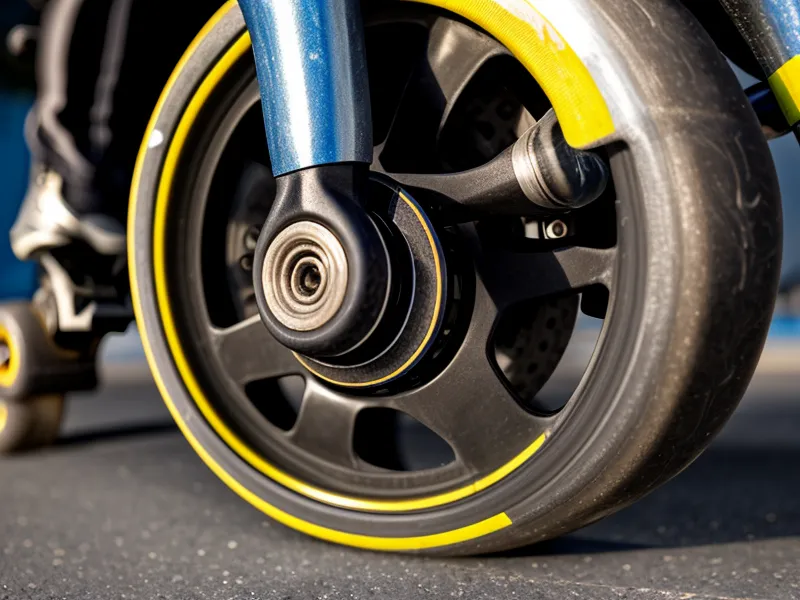
Sealed ball bearings are most of the reason a good inline skate wheel shrugs off the same grit that jams a spinner's open caster. Inline wheels roll two per side in a single fixed direction, which tracks faster and straighter across smooth terminal flooring and resists the sideways drag you feel when a multi-directional spinner wheel catches an uneven seam on a jetway. Spinners still win on pure maneuverability — nothing beats spinning a bag sideways through a packed gate area — but that convenience comes at the cost of grip and scuff resistance on the rougher composite flooring common at regional concourses, and the trade only gets worse as grit works its way into the swivel joint.
Briggs & Riley builds around exactly this failure mode. I usually point people toward Briggs & Riley when they ask what actually survives years of jetway abuse — their two-wheel models run heavier than a minimalist hardshell, but the axles and corners are built to take a hit that would snap a cheap plastic caster clean off. I've gone deeper on how that stacks up against a flight-crew favorite in Briggs and Riley vs Travelpro for Heavy Business Use, so I'll spare you the full rundown here — the short version is that a solid axle takes a hit that a plastic swivel caster just can't.
When the Floor Fights Back
Cobblestone European cities aren't the only rough terrain that punishes a spinner — Indianapolis has its own version in frost-heaved sidewalks, gravel overflow lots, and the kind of aggregate parking surface that eats a small plastic wheel alive. I've rolled a two-wheeler across the gravel overflow lot at the Broad Ripple Farmers Market on a Saturday errand run more times than I can count, tilting and pulling the way you'd steer a hand truck, and it never once caught the way a spinner would have. A two-wheel bag lets you use your own arm as leverage over an obstacle that would stop a spinner's tiny casters dead.
If you've ever tried to fix luggage wheels in a hotel room with a butter knife and pure stubbornness, you already know that fewer moving parts usually wins. The more failure points you build into a wheel assembly, the more chances you're giving grit, salt, and bad pavement to end your trip early.
My colleague Roz Henriksen covers just as much regional ground as I do, and she still swears by her spinner. The last time we ended up on the same tight connection, the difference was hard to ignore — she was wrestling both her spinner and the secondary tote she insists on carrying anyway, personal-item rule be damned (a rule gate agents rarely enforce with any teeth), while my two-wheeler tracked straight behind me without a single correction. Her bag isn't badly made. It's just fighting a floor it was never built for.
Which Two-Wheeler Actually Holds Up?
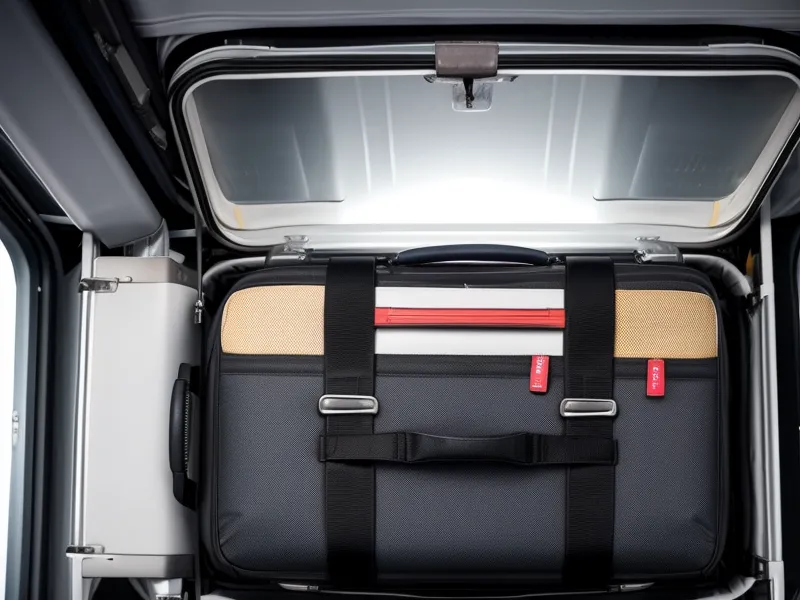
Not every two-wheeler is built the same, and this is where the choice actually gets practical. Briggs & Riley Baseline is the one I point business travelers toward first, mostly because of the lifetime warranty — it explicitly covers airline-handler damage rather than just manufacturing defects, which matters a lot more than most warranty fine print ever does. Their CX-2 compression system earns its keep too, buying you room for another shirt or two without straining a zipper, though that's really a deeper topic for its own post. The trade-off is weight and a conservative, boardroom look that won't turn heads next to flashier hardshells.
For a lighter, cheaper way into the same two-wheel logic, Travelpro has spent years earning trust from flight crews who put a bag through more punishment in a month than most travelers see in a year. The soft-side construction picks up scuffs faster than a hardshell ever would, and the lineup skews toward fewer frills — no shirt board, no built-in compression — but parts are easy to find when a wheel or handle finally gives out, which matters more than it sounds like it should after a few years of hard use. Their tiering runs from a fairly basic entry point up through sturdier lines built for people who fly the way I do, and picking the right tier matters more than the badge on the front.
Choose the Wheel That Matches Your Airport
Spinners still make sense for a specific kind of trip — mostly wide-body hubs, polished terminal floors, and short connections where you're weaving through a packed gate area more than rolling across rough pavement. If that describes most of your travel, the maneuverability is a genuine advantage, and I wouldn't talk you out of it.
Inline skate wheels earn their keep on a different kind of trip: regional jets, salted or gravel-strewn ground between the rental counter and the terminal, and any schedule where a bag gets dragged through more punishment than a single glossy hub can represent. That's most of my travel, which is exactly why I went back. Pick the wheel that matches the floor you actually fly through — not the one that photographs best in a glossy ad.