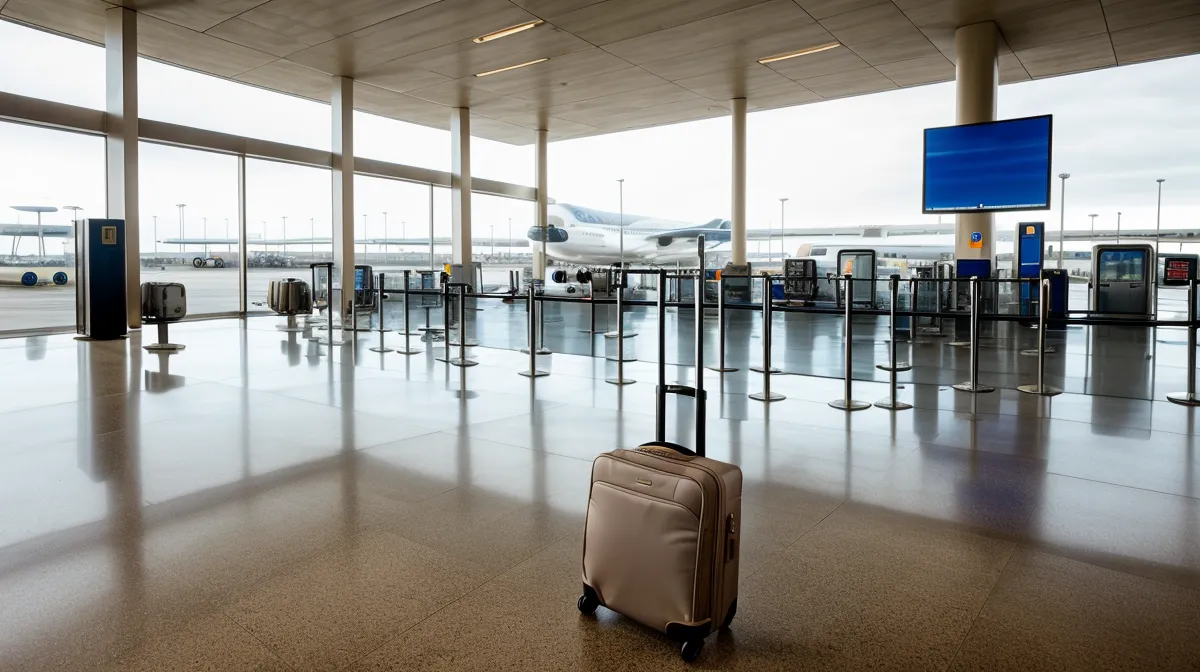
My shoulder keeps reaching for a suitcase that isn't there. Walking down the concourse at Terminal A in Indianapolis International with nothing on me but a laptop bag, I catch myself drifting toward the spot where a wheeled spinner should be trailing behind — pure muscle memory from a decade of business travel and more frequent-flyer segments than I'd care to count.
Quick housekeeping before any of that: this site runs on affiliate links, and the shipping service I'm about to talk up is one of them. Book a pickup through my link and I earn a small commission, you pay the same rate, and the only gear or services that end up on this page are ones I've actually used on real sales routes. The short version of what's coming: shipping a bag ahead doesn't just buy you time at the airport — it changes what the whole trip does to your body.
The Regional Jet Math That Pushes Business Travel Into Checked Bags
Flying out of Indianapolis on fifty-seat regional jets for years teaches you exactly how small an overhead bin can be. A winter coat barely fits, so a structured roller bag is out of the question half the time, which means the jet-bridge valet routine — handing the bag off at the door, waiting on the tarmac while it gets tossed into the belly, hoping it reappears before your connection in Chicago or Detroit boards — becomes part of the job.
Product samples change the math completely. Carrying actual binders, real samples, and a suit that has to survive a client meeting pushes you past what one carry-on can hold, and that's where the airline's rules start working against you: the standard 62 linear inch ceiling before oversize fees apply, the 50 pound mark where the surcharges kick in (the exact numbers shift a little carrier to carrier, but the general shape of the penalty doesn't). Worth knowing those thresholds before you're standing at the counter — I've laid out how carriers enforce carry-on luggage weight limits for domestic flights if you want the specifics.
A friend of mine trains for half-marathons along the Monon Trail and swears by a plain duffel with a shoulder strap — fine for a five-mile loop, less fine for a sales circuit. I copied him for about a year, and by the second terminal of any multi-leg connection my shoulder was done arguing about it. That bag taught me the hard way that a strap comfortable for twenty minutes is miserable for four flights in a week.
How a Shipping Service Actually Gets Your Bag to the Hotel
Luggage shipping services like Luggage Forward route your bag through a dedicated private courier network instead of dumping it onto an airline's baggage belt. Door to door, tracked the whole way, with a 200% on-time guarantee behind it; if the bag shows up late, they refund double what you paid to ship it. That's a real commitment, not the shrug-and-a-tracking-number treatment you get from an airline counter when a bag goes missing for a day.
Ground transit needs real lead time, though. We're talking the better part of a week moving coast to coast, not a weekend miracle, and someone still has to be there to sign for the case at the hotel's back office once it lands. The rule I follow now: anything shipping cross-country gets packed and scheduled on a Wednesday for a Monday meeting, never squeezed into Friday-afternoon travel logistics. Treat it like mailing something important, not like checking a bag twenty minutes before boarding.
Luggage Forward Doesn't Cover Everything You Might Travel With
Sitting out a maintenance delay in a gate lounge a while back, I ended up talking to a touring musician who'd bought an entire extra seat just to keep her cello within reach. When I asked why she didn't just ship it ahead the way I ship sample cases, she laughed before she answered.
Standard courier networks move freight through automated sorters and highway trucks, which is great for sample cases, wardrobe bags, trade show materials, and golf clubs — things built to survive an overhead bin in the first place. They're not set up for climate control, humidity buffering, or the appraisal-grade insurance a wooden instrument needs when a cargo hold swings twenty degrees. For business travelers hauling marketing collateral and a week of suits, the standard pipeline holds up fine. If you're weighing that against just eating the fee at the counter, the full comparison of luggage shipping services vs airline checked bag fees lays out the math better than I can in a paragraph.
Walking Through Terminal A With Nothing to Carry
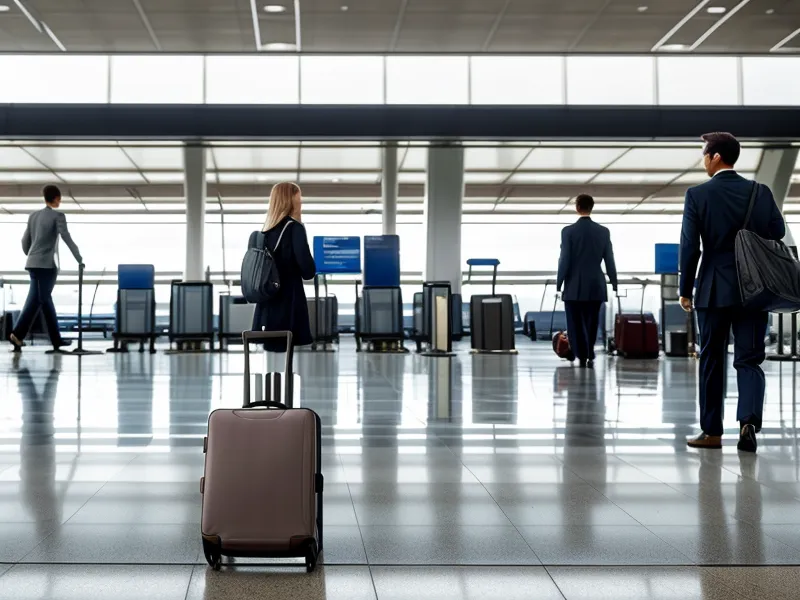
The difference shows up fastest right there at Terminal A. Walking through TSA PreCheck with nothing heavier than a slim leather briefcase — laptop, notepad, one clean shirt — there's a strange phantom-weight feeling in your right shoulder, like an escalator that's stopped moving but your legs are still bracing for the shift.
Baggage claim tells the rest of the story. There's a particular cold that clings to a hard-shell bag fresh off the carousel, the kind you feel through the handle before you've even registered you're holding it, and I didn't miss that chill one bit the week my case was already sitting at room temperature at the hotel's front desk when I checked in. Unzipping it that night, well past a reasonable hour, the shirts inside were still flat — not the creased mess you get after a full day folded into an overhead bin.
When Shipping Actually Makes Financial and Logistical Sense
Shipping isn't a fix for every trip. A quick overnight — out Tuesday morning, back Wednesday afternoon for one client dinner — doesn't need any of this; a compact carry-on and a garment sleeve win on speed and simplicity every time. The math changes once your travel profile crosses certain lines: multi-city runs where you're hauling sample cases through three different rental car transitions, winter routes where boots and a heavy coat eat your entire carry-on allowance, trips where what you've packed is already brushing against that 50-pound or 62-inch ceiling, or meetings where showing up with a wrinkled suit and gate-check grime on your lapels simply isn't an option.
If you're tired of playing the baggage-fee lottery at the counter and want the physical toll off your work trips, Luggage Forward is worth a look for your next heavy route. It won't fix a canceled flight or a snowstorm — nothing does — but walking onto a plane carrying nothing but a briefcase is about as close to easy as a business trip gets anymore.