
Stepping off the shuttle into the Indianapolis airport long-term lot on one freezing Monday morning, I didn’t hear the usual hum of smooth terminal tile. Instead, there was the immediate, violent crunch of rock salt under my boots and my bag’s wheels. It’s a sound every Midwestern regional manager knows—the sound of mechanical longevity being ground into a fine, corrosive powder.
Before we get into the grit, a quick note: I use affiliate links on this site. If you buy luggage or a shipping service through these links, I earn a commission at no extra cost to you. I’ve spent over a decade dragging bags through every weather pattern the Ohio Valley can throw at me, so I only recommend gear I’ve actually put through the ringer. Full transparency policy here.
The Regional Manager Grind and the Salted Asphalt Reality
For those of us flying bi-weekly, a carry-on isn’t a fashion statement; it’s a daily driver. If a check-in bag is the SUV you take on a cross-country road trip, your carry-on is the sedan you commute in every single morning. It has to start, it has to move, and it has to handle the potholes. My Travelpro has been that sedan for me for a long time, but winter in the Midwest is a different kind of punishment. Most luggage marketing assumes you are gliding through a climate-controlled terminal in Singapore, not hauling your life across a slushy parking structure where the temperature has been hovering well below the 32 degrees Fahrenheit mark for a week.
The standard domestic carry-on dimensions of 22 x 14 x 9 inches are designed to fit into an overhead bin, but they don’t tell you anything about how those four small wheels handle the "gray soup" of melted snow and magnesium chloride. When you’re a regional manager, your bag spends as much time on salted asphalt as it does on airport carpet. You’re racing from the rental car return to the shuttle, then from the shuttle across the slushy sidewalk to the terminal doors. By the time you reach the gate, your bag looks like it’s been through a salt mine.
The Gray Soup Test: Mid-January Observations
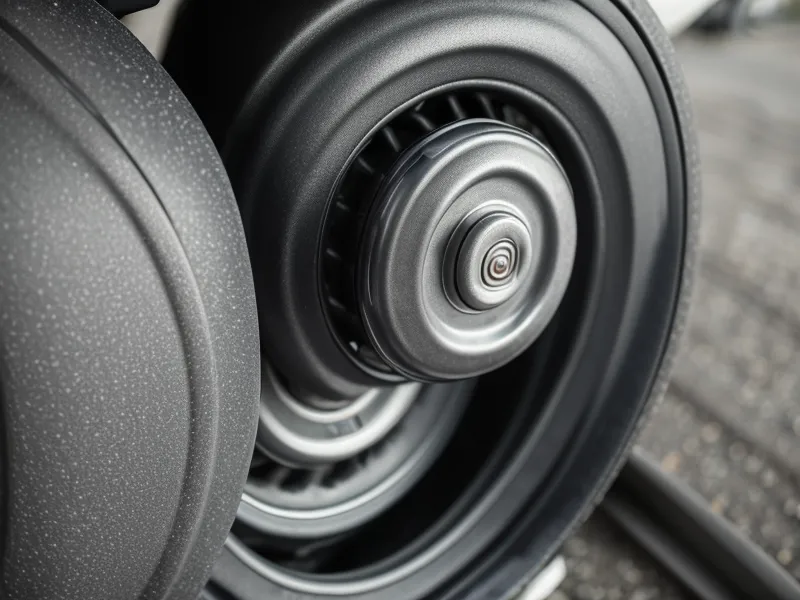
By mid-January, the novelty of the first snow has worn off, replaced by the reality of corrosive de-icers. I noticed a shift in my Travelpro’s performance during a particularly brutal stretch of travel. Magnesium chloride is fantastic for keeping planes from skidding, but it is absolute hell on unprotected metal bearings. A wheeled spinner is like a kitchen knife; it’s a precision tool that works beautifully until you stop maintaining the edge—or in this case, the pivot.
I started noticing the "Travelpro tilt." On clean tile, the bag moves like it’s on ice. But after three days of exposure to the parking lot slush, the wheels began to lose their fluidity. Unlike some of the ultra-premium brands like Briggs & Riley, which often seal their components more aggressively, the Travelpro wheels are a bit more exposed. This is great for weight—the Maxlite line is famously light—but it means the salt has a front-row seat to your bearings. I found myself having to kick the wheels occasionally just to get them to align before boarding, a move that feels decidedly un-professional when you’re wearing a tailored blazer.
The real test came during a late February thaw. The salt had dried into a white crust on the wheel housings. As I walked through a quiet hotel lobby during a late-evening check-in, I heard it: the gritty, rhythmic clicking sound of road salt trapped inside a spinner wheel bearing. It was a tiny, persistent reminder that the hardware was being eaten from the inside out. It’s the kind of sound that makes you realize you might be shopping for a replacement sooner than the warranty department would like to admit.

The Forearm Tug: When Spinner Wheels Fight Back
The turning point happened about four months into the winter season. I was rushing toward the terminal at IND, trying to make a tight connection because the shuttle was late. I hit a patch of heavily salted sidewalk near the terminal entrance, and I felt it—a sharp, annoying tug in my forearm when the front-right wheel refused to pivot. When a spinner wheel seizes, even partially, the bag stops being a partner and starts being an anchor. It wants to go left while your body is moving right, and your wrist ends up taking the brunt of the correction.
This is where the "four-wheel vs. two-wheel" debate gets real. Many flight crews actually prefer the old-school two-wheeled "Rollaboard" styles specifically because those larger wheels have fewer moving parts to fail in these conditions. Spinners have eight tiny wheels (on a double-wheel system) and four vertical pivot points. That’s twelve different places for salt grit to jam the works. If you are an urban commuter in a high-salinity climate, you aren’t just fighting gravity; you’re fighting chemistry.
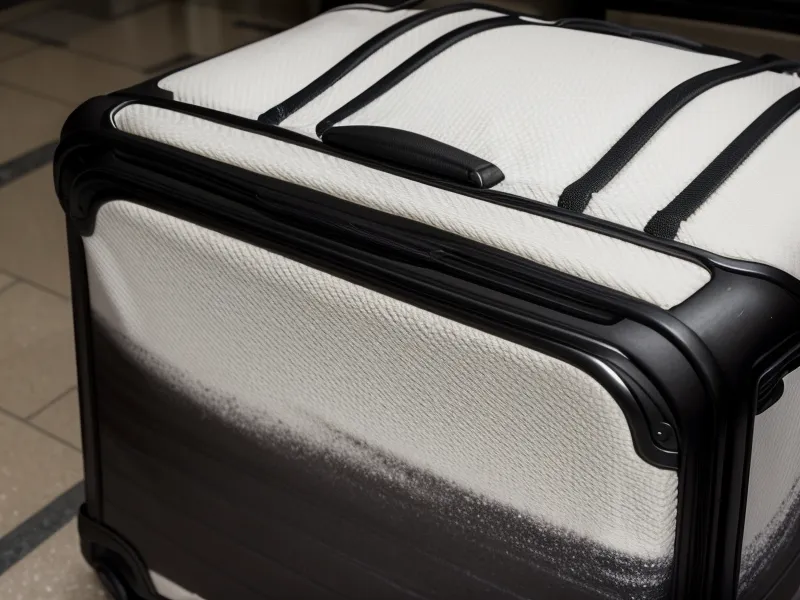
I’ve learned that standard wheel maintenance advice—usually a "wipe with a damp cloth"—is laughable in a Midwestern February. If you don’t actually flush the bearings with fresh water, the salt stays in there and crystallizes. I tried the "hotel bathtub flush" once, which led to a different kind of failure. I realized the soft-side fabric of the Maxlite actually absorbs the gray, salty water as it drips off the wheels. I ended up with a bag that had clean wheels but a permanent, salt-stained tidemark along the bottom three inches of the fabric. It looked like the bag had spent the night in a gutter.
The Verdict: Can Travelpro Survive the Salt?
After about four months of this punishment, I had to take a hard look at the damage. The fabric was scuffed and salt-stained, a common casualty of soft-side construction compared to a hardshell. However, the mechanical survival was surprising. While the wheels had that annoying click, they hadn't completely seized. This is the secret reason I keep coming back to Travelpro luggage for heavy use on regional routes: you can actually fix it.
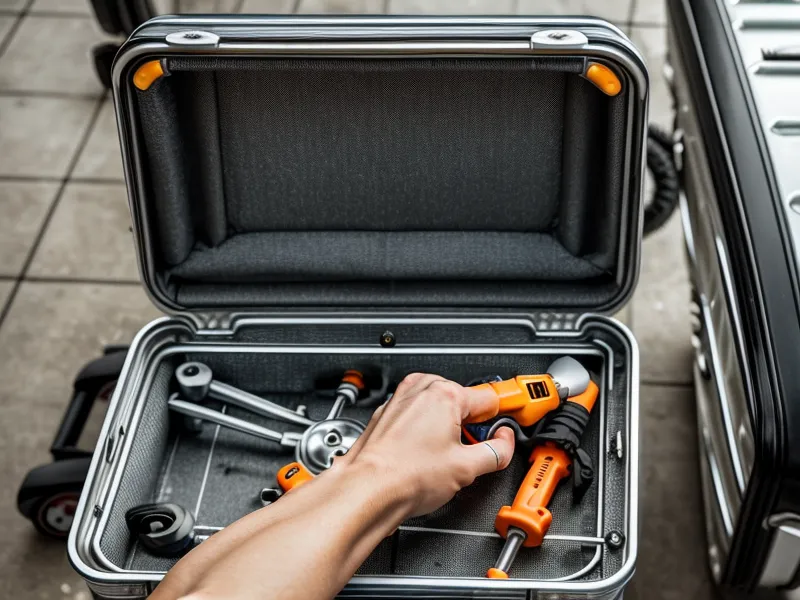
Unlike some budget brands where a dead wheel means a dead bag, Travelpro makes it relatively easy to find replacement parts. I eventually spent twenty minutes with a screwdriver replacing the wheel housings, and the bag was back to its factory-smooth glide. It’s a bit like owning a car with high mileage; you know you’re going to have to replace the tires and the brakes, so you might as well buy a model where those parts are accessible. If the salt is too much for you to handle, you might even consider a service like Luggage Forward to just ship your gear ahead and let someone else deal with the logistics of the parking lot slush.
If you’re someone who only flies once a year for a summer vacation, you’ll never have to worry about magnesium chloride eating your bearings. But for the road warriors who measure their lives in segments and boarding groups, the winter parking lot is the ultimate proving ground. The Travelpro spinner wheels aren't invincible—they will definitely feel the grit of a salty January—but they are resilient enough to survive with a little maintenance. Just don't try to wash them in the hotel tub unless you want a salt-stained souvenir on your fabric.
Choosing the right bag always feels like a gamble, especially when you’re trying to navigate the standard carry-on size rules and winter weather simultaneously. If you’re tired of your wheels dying after one season of salt, it might be time to look at a bag that’s built for the repair shop as much as the runway. You can check the current pricing and wheel specs for the latest Maxlite models on the Travelpro site, as they tend to update the bearing shields every few cycles. Stay warm out there, and keep those wheels moving.