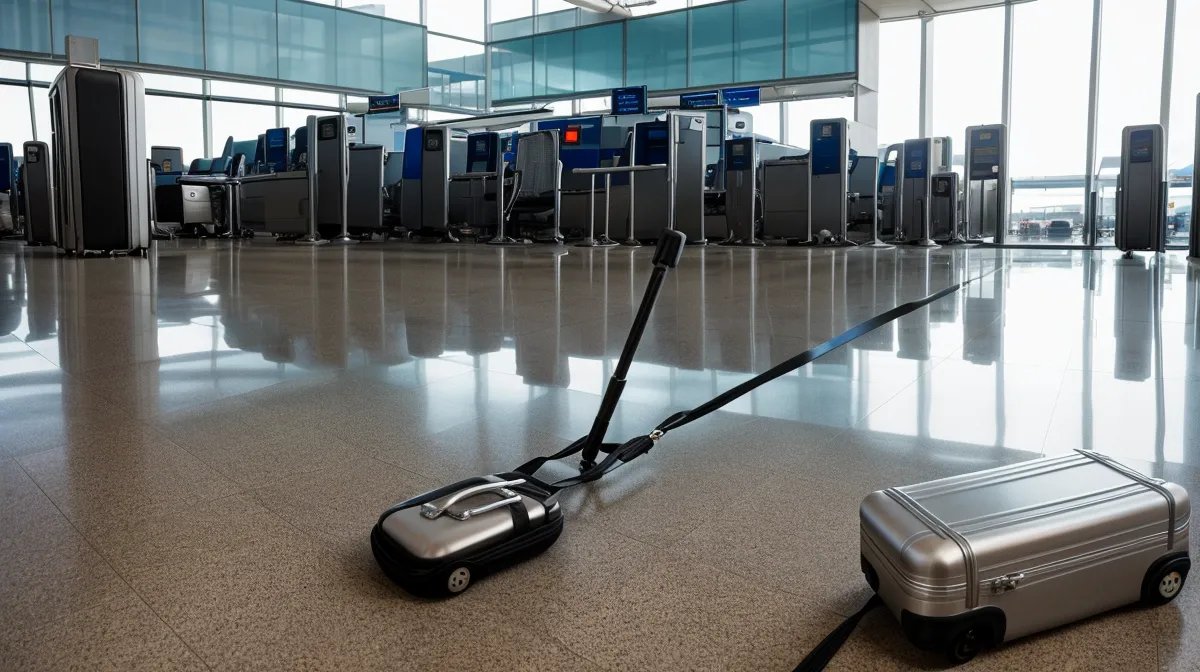
It was well after dark in a dimly lit hotel room in Des Moines, and I was doing the thing I hate most: the suitcase knee-press. I was trying to force a week’s worth of samples and dress shirts into a frame that clearly wanted out of the arrangement. In the past, this is the exact moment where the sound of a zipper tooth snapping—that sharp, plastic crack—would signal the end of my bag and the start of a very expensive morning at an airport kiosk. I’ve been through three bags this way in the last few years alone.
Before we dive into the guts of why this LEVEL8 bag hasn't left me stranded yet, a quick heads-up: this site uses affiliate links. If you buy a bag through them, I earn a commission at no extra cost to you. I only recommend gear I’ve actually dragged through the terminal myself, usually while wondering if I’ll make my connection in Charlotte. Full transparency is the only way this works.
The Graveyard of Budget Bags and Regional Jet Reality
I’ve spent over a decade as a regional account manager out of Indianapolis. My life is a recurring loop of 737s and those cramped CRJ-200 regional jets where the overhead bins are basically suggestions rather than actual storage spaces. In that time, I’ve developed a specialized set of skills, mostly involving fishing broken zipper sliders out of bag linings with a paperclip in a Chicago terminal. It’s a ten-minute exercise in frustration that usually ends with me using a TSA strap to keep my underwear from spilling onto the jet bridge.
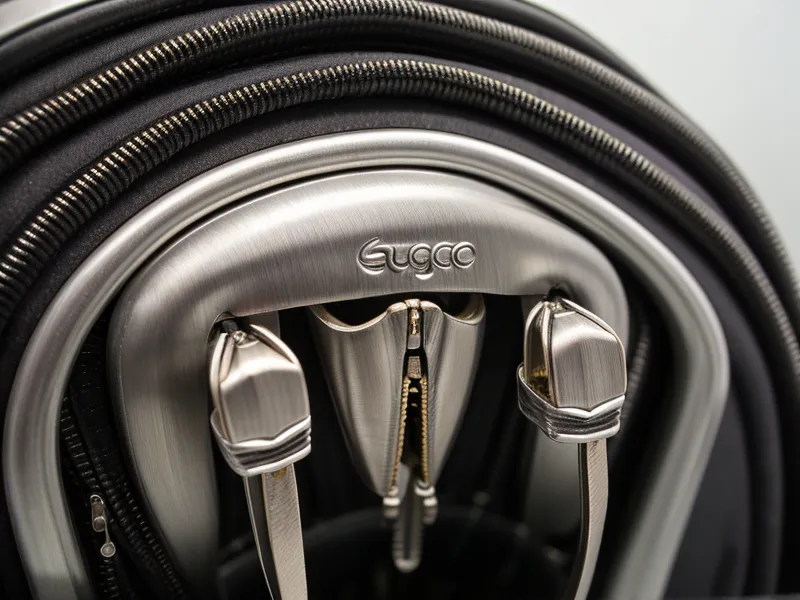
Most people look at a bag and see the color or the pockets. I look at the hardware. A wheeled spinner is essentially a kitchen knife; if the edge (or the zipper) is dull or flimsy, the whole tool is useless. I’ve seen enough "budget" bags die in the overhead bins to know that a pretty shell means nothing if the teeth don't bite. When I first transitioned from my old soft-side Travelpro units to the hardshell Level8, I was skeptical. The track looked fine-toothed and almost too sleek to survive the lateral tension of a forced gate-check.
The Hard Truth About Hardshells and Burst Pressure
There is a fundamental difference in how zippers behave on hardshell luggage versus soft-side bags. If you’ve ever chosen a daily driver over a road-trip car, you get the logic: one is built for flexibility, the other for structure. Soft-side bags like the ones I used for years on heavy-use regional routes have some give. The fabric stretches, which actually takes some of the "bursting" pressure off the zipper coils.
Hardshells are different. The frame doesn't stretch. When you overpack a polycarbonate shell, every ounce of that internal force is pushed directly against the zipper track. This is why many hardshells fail early; the zipper is the only thing standing between your gear and a catastrophic blowout. Most high-end zippers are measured by YKK gauge sizes, where a larger number indicates a wider, stronger tooth. While Level8 doesn't always shout about their specs in their marketing, the hardware on my unit has a physical heft that suggests they aren't using the flimsy #5 coils found on department store clearance racks.
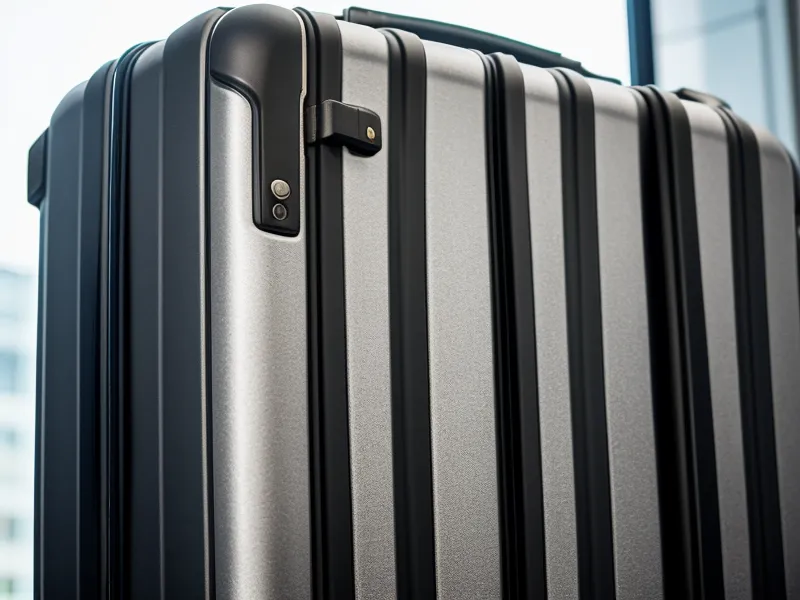
One sensory detail that sold me was the distinct, metallic "snick" of the zipper pulls locking into the integrated TSA 007 mount. On cheaper bags, you have to wiggle the pulls into the slots like you’re trying to pick a lock. On this one, they just find their home. It’s a small thing until you’re rushing to pack at 5:00 AM and your motor skills haven't quite checked in yet.
The August Pressure Test: Samples and Scrambles
The real test came one humid morning in August. I was heading out for a three-city swing with a bag packed to the absolute legal limit—exactly 22 x 14 x 9 inches—filled with heavy client samples and a pair of backup shoes. During a gate-check scramble on a full flight, the bag was tossed into the hold of a regional jet. I watched from the window as it was stacked under three other heavy suitcases.
That kind of lateral tension is a zipper killer. It’s the "road-trip car" being loaded with bricks. Yet, after about three months of this bi-weekly punishment, the teeth haven't misaligned once. I found myself one evening in a hotel room, actually inspecting the zipper teeth with my phone flashlight like some kind of forensic investigator. My wife would have laughed her head off if she’d seen it, but after a decade of failures, I wanted to see if the coils were fraying. They weren't.
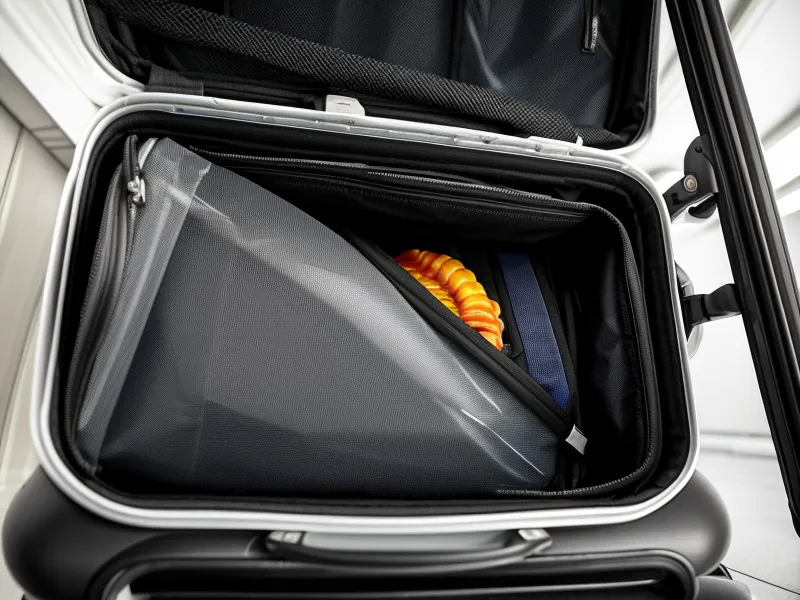
There is a measurable tradeoff here, though. Higher zipper durability almost always increases the total weight of the luggage. A beefy, high-gauge zipper track isn't made of air. If you are the kind of traveler who obsesses over every gram because you’re trying to meet a strict international weight limit, you might find the Level8 a bit heavier than those ultralight minimalist bags that prioritize mobility over longevity. Personally, I’ll take the extra few ounces if it means I don't have to worry about a zipper snagging mid-pull. I’ve noticed a total absence of that familiar shot of adrenaline and annoyance that usually hits when a zipper starts to catch.
How It Held Up: The Seven-Month Verdict
I’ve been running this LEVEL8 through the gauntlet since early March 2025. We’re now in late September 2026, and the hardware hasn't flinched. It doesn't have the lifetime "airline damage" coverage of a Briggs & Riley—which is still the gold standard if your work budget is bottomless—but for a bag that actually survives the overhead bin gamble, it's impressive.
If you’re tired of the "will it or won't it" game every time you zip your bag shut, I’d tell you to stop overthinking the shell and start looking at the track. For the every-other-week road warrior, this bag is a solid choice. If you’re a once-a-year flyer, you might not need this level of hardware, but for those of us whose marriage pays for the family vacations and whose work pays for the flights, we need things that don't fall apart. If you need to avoid the baggage carousel altogether, you might even look into a luggage shipping service, but for the rest of us, the Level8 zipper is the real deal.
Bottom line: If you want a bag that looks like a premium aluminum unit but actually handles the pressure of a overstuffed business trip, the Level8 is the one to get. If you’re truly rough on gear and want a warranty that covers literal plane crashes, you might still want to look at Briggs & Riley, but you’ll be paying a lot more for that peace of mind. For me, the Level8 is the sweet spot of durability and design.
LEVEL8
Pros
- ✔ Aluminum-frame aesthetics without the four-figure price tag
- ✔ Remarkably quiet 360-degree spinner wheels that glide on airport tile
- ✔ Zipper track handles significant lateral tension without teeth misaligning
Cons
- − Slightly heavier than minimalist soft-side bags due to beefier hardware
- − Aluminum accents can pick up scuffs that don't buff out easily