
Geneva checks a bag every single time, no matter the trip length, and calls carry-on-only culture a mild collective delusion the rest of us have agreed to share. I have not checked a bag on a work trip in a long stretch, and I still think she's the one who has it backwards. We fly out of enough of the same regional circuits that our return flights usually turn into an argument about whose current suitcase is holding up better. This piece is my side of that argument: a full year, roughly the usual twenty-six round-trips a business travel schedule like mine racks up, spent on the Travelpro Maxlite, the soft-side carry-on that turned this into an actual carry-on durability test instead of another luggage review nobody asked for.
Before any of that: this site runs on affiliate links, and if you buy through one, I get a small cut at no extra cost to you. The Travelpro Maxlite below is one of those links, and I only vouch for it because I've now dragged it through twelve straight months of the same abuse I'd throw at any bag: slush, jet bridges, an overhead bin that seems designed for something smaller than a human torso.
The Graveyard of Bags Before This One
My garage has turned into an actual timeline of bad luggage decisions. A hardshell picked up a spiderweb crack after one rough gate-check in Detroit. A spinner's handle jammed permanently in the "up" position. A couple of budget zippers just gave up mid-trip, one of them on the walk to the gate. Luggage, when your business travel schedule runs this often, stops being an accessory and starts acting like a kitchen knife: it needs to hold an edge, and if it costs as much as a used sedan, you've missed the point entirely.
None of the marketing about "indestructible" shells accounts for what a CRJ-200 overhead bin actually looks like from the inside: closer to a breadbox than a cabin. Most bags get built around the standard domestic carry-on size limit of 22 by 14 by 9 inches, and regional gate agents treat that number as a polite suggestion right up until they're slapping a tag on your handle. Bin sizing on those smaller jets is its own separate headache, worth its own article, but it's the reason I stopped trusting any spec sheet that never mentions regional aircraft at all.
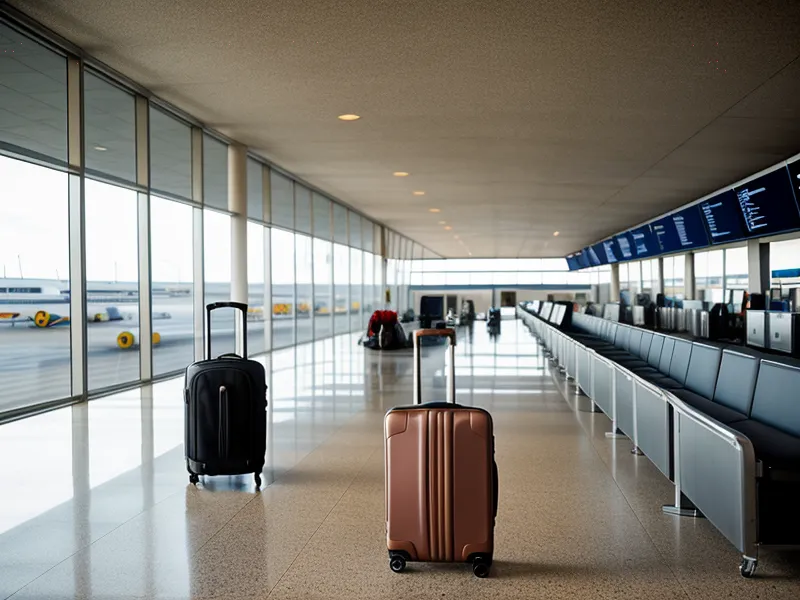
Does Soft-Side Actually Win the Weight Fight?
The Travelpro Maxlite 5 weighs 5.4 pounds, which in carry-on terms is close to weightless. Coming off years with a heavier-framed Briggs & Riley, built more like furniture than luggage, honestly, and backed by a lifetime warranty that's worth pricing into the decision on its own, switching to the Maxlite felt like trading a cast-iron skillet for a nonstick pan. Sprinting to a gate got easier. Your shoulder notices the difference by the time you reach the hotel shuttle.
That lightness is a trade, not a gift. The shell is a thinner polyester, not a rigid hardshell, and I found out exactly what that means on a humid afternoon when I'd tucked my laptop into the front pocket to save time at security. A rough gate-check shuffle knocked the bag off a cart, and with no rigid frame to absorb the hit, the impact went straight into that pocket. The screen survived. I did not enjoy the next four hours of the flight not knowing that for certain. If you're a front-pocket packer, treat your electronics like they're made of glass, because a soft-side bag like this one will not do that job for you.
Put simply, rigid protection against dead weight is the real hardshell-versus-softside tradeoff, and no version of this bag gets you both at once. If you need something that shrugs off an actual hammer blow, the reality of aluminum bags is a better starting point, and LEVEL8 gets you that aluminum-shell look and build for noticeably less than the legacy brands charge; you just pay for it in extra pounds against how much you can actually pack, plus a first scuff that won't flex back out the way polycarbonate does. Travelpro's own pricier Platinum Elite line splits the difference with a sturdier shell and nicer lining, but that's a different bag for a different review.
A Chicago Winter Tests Carry-On Durability
Salt is the natural enemy of any wheel bearing, and Indianapolis parking lots get salted hard by January. Most bags start grinding and complaining within a few weeks of that treatment. By the fourth week of hauling the Maxlite through slush-caked lots, the wheels hadn't picked up the gritty drag I'd learned to expect from cheaper bags by that point. Travelpro uses a simple, open wheel housing that doesn't trap road salt the way some of the shrouded, premium-looking wheels on boutique brands do, and wheel construction ends up being a bigger factor in how a bag ages than anything printed on the price tag. The clearest moment of that came loading the bag into a rental car trunk outside Chicago on a bitter February afternoon, half-expecting the frame rails to have gone brittle from the cold the way an old zipper pull sometimes does. They hadn't. No cracks, no stiffness, just a slightly frosted handle.
Then came a genuinely tight connection through that same airport a few months later: a handful of minutes to cover a full terminal switch, moving at close to a jog. The bag's tracking, meaning how straight it rolls when you're not slowing down to babysit it, stayed flawless the whole way; no fishtailing, no death wobble, just following. It's the daily-driver version of luggage: not the bag you valet at a five-star hotel, but the one that starts every single morning at ten below. Gate-checking would undo a lot of that goodwill fast: the exposure a bag takes getting tossed onto a cart and buried under heavier bags is a different kind of punishment than rolling through a terminal, and it's usually the reason wheels and zipper pulls die first, not age.

Grease Stains, a Pilot's Beat-Up Bag, and What Actually Gets Fixed
A few months in, I ended up at a gate next to a flight crew, looking at a pilot's Travelpro that had clearly been through a decade of this: scuffed corners, a grease smudge on one side, a handle worn smooth. Crews buy this brand for a practical reason that has nothing to do with status: when a wheel or a zipper pull eventually dies, and it will, you can source the part and fix it instead of replacing the whole bag. That's the same argument behind durable luggage for professionals: buy the thing that gets repaired, not the thing that gets replaced. I've had exactly one stuck-zipper scare on a trip, solved in a hotel room with nothing but patience and some careful wiggling, which is its own small skill worth having if you travel enough to eventually need it.
The stain itself showed up after a rough gate-check last spring, a black smudge that took a solid twenty minutes of scrubbing with a damp cloth to mostly disappear. Polyester is a magnet for airport grime in a way a hardshell panel just isn't, and if you need your gear to look pristine at every landing, this bag will annoy you. It's going to get scuffed and stained and generally look like it's been through a war, because a regional jet circuit basically is one. Unzipping it after a long trip lets out a smell that's oddly specific once you notice it: stale pressurized air, the rubber tread of every baggage carousel I've stood next to, and an undertone I can only describe as loose-change metal. The zippers, for what it's worth, haven't complained once in a year of that treatment, and a zipper that bites clean shut every single time matters more to how a bag ages than almost anything else on it.

Shipping Samples Ahead Wasn't the Shortcut I Hoped
Not every solution to bin space is a better suitcase. For a stretch of trade-show trips, I tried calling hotels ahead of time and shipping sample cases via FedEx so I wouldn't have to wrestle them through security at all. Three times out of four, the front desk had no record of the package when I checked in, which meant the first hour of a work trip went to a phone call with a shipping company instead of prepping for a meeting. Shipping gear ahead can genuinely make sense in the right situation: heavy trade-show samples, a second checked bag's worth of stuff, anything where the math on baggage fees stops working in your favor. But it only pays off if the receiving end is actually set up for it, and most hotel front desks are not built to double as a warehouse. I still lean on a system for what goes into the bag itself rather than treating shipping as a crutch: suits and shirts get folded a specific way so they survive the trip, and anything that genuinely needs to hang gets a garment bag instead of getting crushed into a spinner that was never built for it.
So Is the Maxlite Still Worth Your Money?
A full year and the usual twenty-six round-trips later, the zippers still bite shut cleanly and the handle hasn't developed that telltale wiggle worn-out bags get. It fits standard dimensions without a fight, sliding into a gate sizer with a solid thunk that gets a nod even from agents who've clearly heard every excuse in the book.
My neighbor Trent asked about carry-ons at a block party a while back, and he still texts me questions about his own bag now and then, including one from Geist Reservoir a few weekends ago, rod in hand mid-cast, wanting to know if my wheels had started grinding yet. Trent flies about once a month, a genuinely different wear schedule than mine, and that gap is useful: if a bag holds up fine on his slower pace but wears out faster under a business travel schedule, that tells you something about how hard you personally plan to run it.
If your trips mean packing a full week of suits and keeping them wrinkle-free, look at the Briggs & Riley CX-2 system instead; its expansion panel buys real extra room without blowing out a zipper seam, at the cost of extra weight you'll feel by the second flight. But if you're a regional road warrior who just needs to get from Indianapolis to Chicago without wrecking a shoulder or a zipper, the Travelpro Maxlite is the smarter spend. And if you're ever genuinely overloaded with heavy samples for a trade show or gear that won't fit in any carry-on, save yourself the argument at the gate and look into using a service like Luggage Forward instead, giving it a longer lead time than I gave my FedEx experiment.
The lesson I keep coming back to, a year in, is smaller than any spec sheet: stop shopping for the bag that looks impressive at security, and start shopping for the one whose wheels and handle you can actually get replaced when they fail, because they all fail eventually. Geneva still thinks I'm ridiculous for never checking a bag. I still think she's ridiculous for checking one on a two-day trip. Neither of us has budged, and at this point I don't think either of us is trying to.
Travelpro
Pros
- ✔ Incredibly light at 5.4 pounds, saving your back on long concourses
- ✔ Soft-side flexibility helps it squeeze into tight regional jet bins
- ✔ Replaceable wheels and handles extend the bag's life significantly
Cons
- − Front pocket offers almost zero impact protection for laptops
- − Polyester fabric picks up stains and grease marks easily