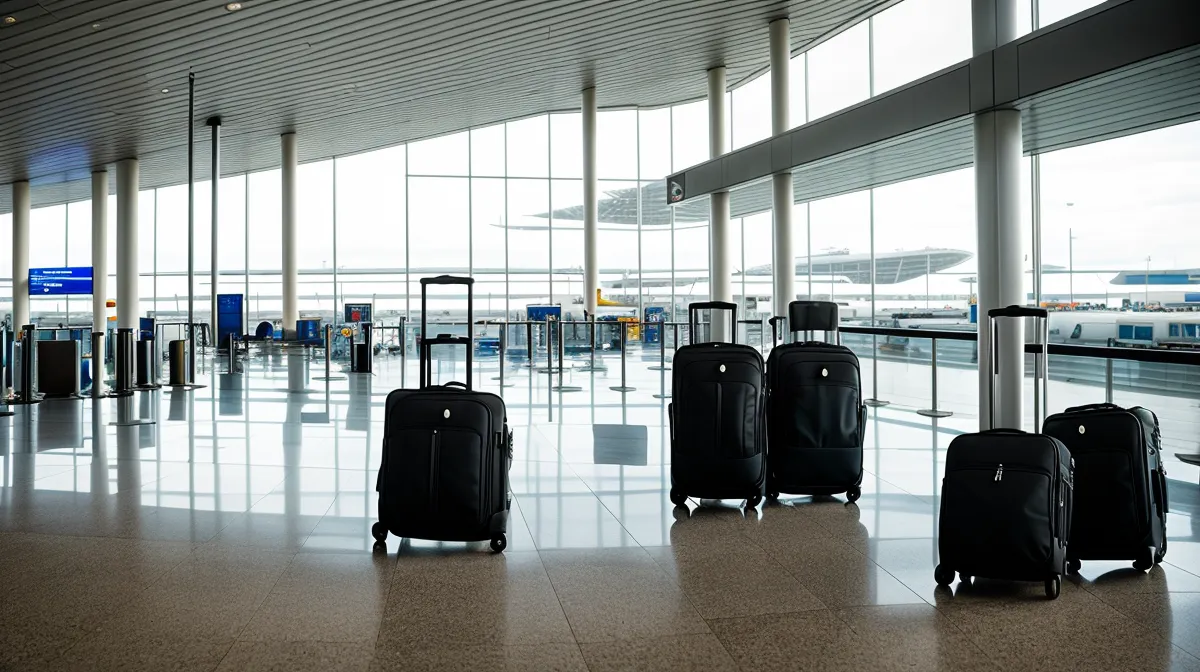
A garment bag keeps a suit safe. A carry-on wrecks it. That's the assumption behind half the packing advice out there, and it's why so many business travelers haul two bags through Terminal A at Indianapolis International Airport when one, packed right, would do the job. I've flown for work roughly every other week for over a decade, long enough to know the assumption doesn't hold: the real threat to a blazer isn't which bag category you pick, it's what happens to the fabric at the fold. Suit-packing durability comes down to that one hinge point, and most carry-ons get it wrong before you've even zipped the lid.
Quick disclosure, since it matters more here than in most gear reviews: some of the links below — to Briggs & Riley, to Travelpro and LEVEL8, and to a shipping service I use when a trip gets complicated — are affiliate links. Buy through one and I earn a commission at no extra cost to you. Nobody sends me these bags for free; I buy them, run them through actual trips out of Indianapolis, and retire the ones that let me down.
A friend of mine, the one who trains for half-marathons along the Monon Trail, is a good example of how the myth survives. Before he asked me what to buy, he flew with a soft duffel slung over one shoulder, and by the second terminal of any given trip his shoulder ached enough that he blamed the strap. The strap wasn't the problem. Nothing inside that bag had a fixed place to live, so the whole load kept shifting and pulling sideways with every step. The standard domestic carry-on size limit boxes every bag into the same 22 x 14 x 9 inches no matter the brand, so the only real variable left is how the inside of that box gets organized. That's the question that eventually got me off disposable hardshells and onto a Briggs & Riley Baseline.
The Suit-Packing Myth That Costs You a Crease
Conventional wisdom says the safest way to move a suit is a dedicated garment bag, or at minimum a rigid folder board pressed in tight so nothing shifts. I followed that advice for years. Then I packed the same blazer two ways on the same multi-city run — once folded around a folder board, once in the Baseline's built-in suiter — and the board version came out with a harder, deeper crease across the shoulder, while the suiter version came out with one soft fold that had already loosened by the time I hung it up. A suiter panel built into an ordinary carry-on puts the crease in a different, more forgiving spot than a stand-alone garment bag does, which turns out to be the whole argument for choosing one over the other.
The part that makes it work is a foam bolster in the lid, not a hard board. It keeps the jacket from folding at a sharp angle, which is where a permanent lapel crease actually starts. That took a while to accept, because it runs backward from what every garment-bag ad implies: more structure isn't the same as more protection. Less pressure at the fold, applied consistently, beats a rigid board every time I've tested it.
Where Luggage Durability Actually Comes From
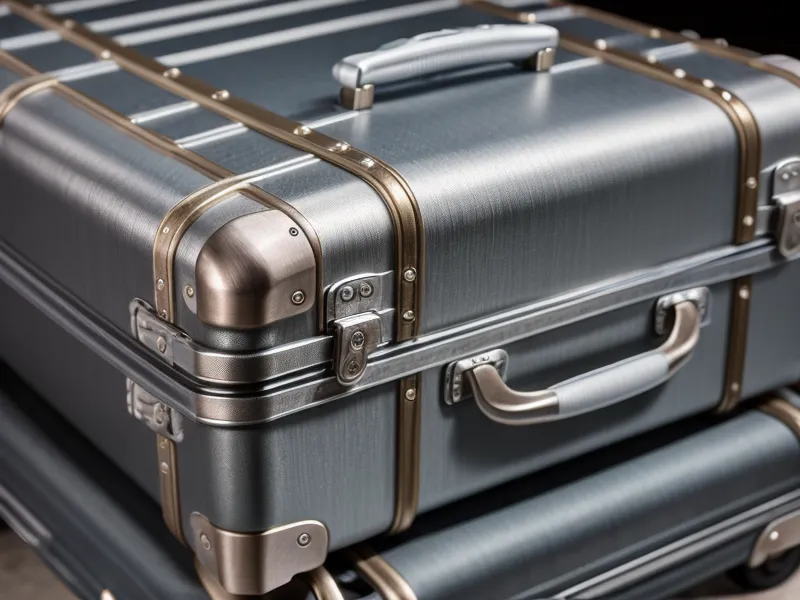
Regional jets don't help the case for soft bags. A lot of the fleet flying out of hub airports has overhead bins built for a laptop sleeve and not much else, so anything oversized gets a green tag and a ride in the belly of the plane — exactly where a suit's crease goes to die. The Baseline is built heavier than the ultralight shells that dominate the category now, with corners dense enough that they don't visibly deform after a rough toss onto a luggage cart. I've written elsewhere about the only carry-ons still rolling after a year on the regional circuit, and the tradeoff between a rigid hardshell and a structured soft-side is really its own topic — this bag just happens to land on the sturdier end of it.
It also expands using internal brackets instead of the zip-around gusset most soft-sides rely on, which buys real room without turning the bag into a sagging shape once it's full. I've broken that mechanism down elsewhere in more detail, so I won't repeat the whole thing here.
Does a Bigger Suitcase Actually Protect the Suit Better?
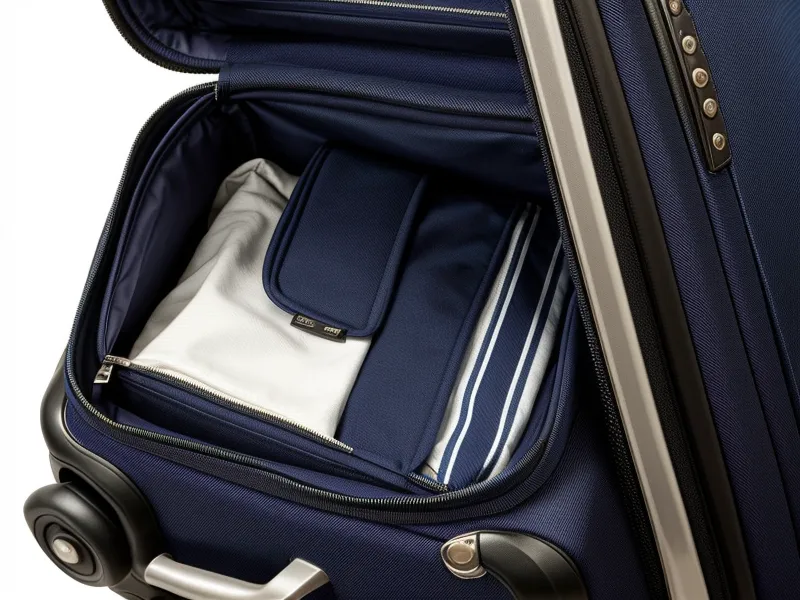
Not automatically, and this is where the myth does the most damage. A bigger bag just gives a badly organized suit more room to shift during a gate-check, and a gate-check is where most business-trip suits actually get ruined — tossed on a belt loader, stacked under other bags, dropped the last foot onto the tarmac. Size doesn't fix that. What fixes it is a fixed compartment the jacket can't migrate out of, which the Baseline has in the lidded suiter with the bolster running through the middle. If you're weighing a hardshell against a soft-side for this exact problem, I've laid out my thoughts on Briggs and Riley vs Travelpro for heavy business use, since the two brands solve the suit question in almost opposite ways.
The moment that actually sold me on this bag happened close to midnight in a hotel room, unzipping it after a day that had started before five in the morning, and finding the shirts still lying as flat as when I'd packed them — not the graveyard of wrinkles every soft bag had handed me up to that point. It's a small thing to build a recommendation on, but it's the thing that's supposed to happen and almost never does.
Packing Around the 3-1-1 Rule Without Losing Suit Space
Suits aren't the only thing competing for space. Shirts, ties, and the 3-1-1 liquid rule (3.4oz bottles, one quart bag, one person) all need somewhere to live that isn't inside the suiter. The Baseline has an external 'SpeedThru' pocket lined in orange so you can see at a glance whether you left your dopp kit inside — useful when you're moving fast through security and don't want to unpack the whole bag to check.
Handle tubes matter more than people expect, too. On most bags they run down the inside of the shell and create two raised humps at the bottom of the packing space, so you end up wedging socks into the gaps just to keep things level. The Baseline mounts its handle system outside the shell, which leaves the packing floor flat, which means trousers actually lie flat instead of buckling around hardware. For the trips that go sideways anyway — three cities in three days, a meeting too important to gamble on a gate-check — I've started using Luggage Forward to ship a bag ahead instead of carrying it at all. Whether that trade actually pencils out depends on the trip, and I've gone through the math in why I use luggage shipping services for hectic multi-city trips.
The Parts That Actually Wear First
Wheels are usually where a bag's story ends. The bargain hardshell I used before this one (the kind that looks fine in a product photo and terrible after three connections) had a telescoping handle that used to click cleanly to full extension, and somewhere along the way it started catching a notch short and needing a second try — right around the time the zipper gave out entirely, in a hotel room the night before a presentation that mattered. That bag never announced its failure loudly; it just quietly stopped being trustworthy. The Baseline's wheels sit recessed into a housing rather than hanging exposed off the corners, which is the main reason I haven't had to think about them since. I've gone deeper on wheel mechanics and repair in why I switched back to inline skate wheels for regional travel if you want the long version.
The warranty is the other piece worth knowing before you spend real money on a suitcase. A coworker had a decade-old Briggs bag come back from a crushed-corner repair at no charge, no questions asked about how it happened — coverage that's easy to undervalue until you actually need it. I've covered the specifics in my Briggs and Riley luggage lifetime warranty review, so I'll leave the fine print there.
Is the Premium Price Worth It?
Spending five or six hundred dollars on a suitcase feels unreasonable until you count how many cheaper bags you've replaced doing the same job. A Travelpro costs meaningfully less and has kept flight crews happy for years, which says something about how it holds up under real abuse — it just doesn't have the suiter architecture this whole article is actually about. A LEVEL8 gets you an aluminum-look shell for a fraction of the price, which covers the looks-expensive box but not the suit-specific one. Neither is a bad bag; they're built for a different question than the one this article is answering. If you fly twice a year, buy the cheaper option and don't think twice. If your work means living out of a 22-inch box every other week, the math changes the same way it does with a good pair of boots — you pay once instead of solving the same problem every year and a half.
The Briggs & Riley Baseline is the only bag I've used that keeps a suit looking like it just came off a hanger instead of out of cargo. It's heavier than it needs to be and it costs more than it should, by the standards of an industry that keeps releasing lighter, cheaper, flimsier bags every year. But the myth that a bigger suitcase or a stiffer garment folder protects a suit better was never true, and once you've packed around that instead of against it, going back to the old assumption is hard to justify.